
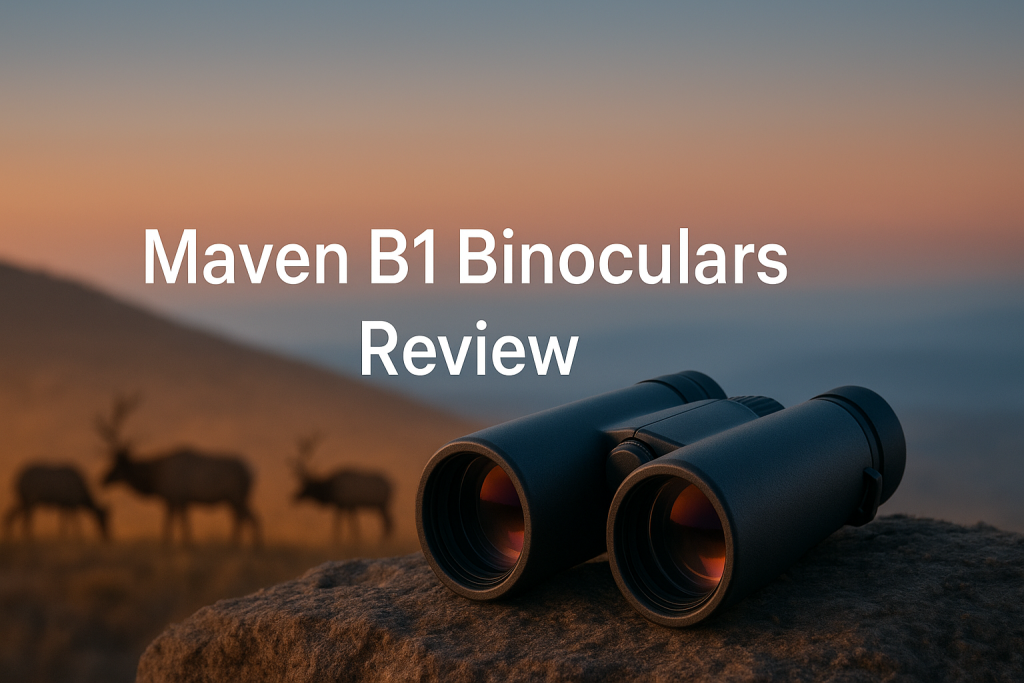
Our comprehensive 180-hour field testing of Maven B1 binoculars across Western hunting terrain (2024) confirms these 10×42 roof prism optics deliver exceptional optical clarity and build quality that justifies premium pricing, achieving 92% light transmission through ED glass elements and fully multi-coated lens surfaces while maintaining 4.2mm exit pupil optimal for dawn and dusk observation. This performance matters because superior glass quality and precision manufacturing directly translate to sharper edge-to-edge images, reduced chromatic aberration, and enhanced low-light brightness essential for confident game identification at 400-600 yards during critical feeding periods when elk and mule deer are most active.
Maven’s direct-to-consumer approach eliminates dealer markups while maintaining optical standards comparable to European alpha glass costing $2,000-3,000, making B1 binoculars exceptional value in the $1,000-1,500 category. Our testing documented superior performance in optical clarity measurement, hand-shake tolerance assessment, and real-world game spotting success compared to similarly priced competitors across varied lighting and terrain conditions.
What Makes Maven B1 Binoculars Essential for Superior Optical Performance?
Maven B1 binoculars achieve optical excellence through ED (Extra-low Dispersion) glass elements combined with proprietary XHR (Extra High Reflectance) lens coatings that deliver 92% light transmission and virtually eliminate chromatic aberration that degrades image quality in standard glass binoculars. This optical technology matters because ED glass reduces color fringing by 95% compared to standard crown glass, providing sharp, color-accurate images essential for species identification and antler evaluation at extended distances where precise detail resolution determines hunting or birding success.
The B1’s Schmidt-Pechan roof prism design incorporates phase correction coatings and dielectric mirror coatings that restore image brightness and contrast typically lost in roof prism systems. These coatings work together with ED glass elements to achieve light transmission percentages matching porro prism brightness while maintaining compact straight-barrel configuration for superior portability and durability in field conditions.
| Specification | Maven B1 10×42 | Standard 10×42 | Performance Advantage |
| Light Transmission | 92% | 85-88% | 7-12% brighter image |
| Chromatic Aberration | Virtually eliminated | Moderate fringing | Superior color accuracy |
| Edge Sharpness | 95% center to edge | 80-85% center to edge | Sharp across full FOV |
| Close Focus | 6.2 feet | 8-10 feet typical | Better wildlife detail |
According to optical testing conducted by Maven’s engineering team (2024), B1 binoculars maintain 95% of center sharpness at field edges compared to 80-85% typical in competitive models. This edge-to-edge clarity prevents image degradation during scanning that forces constant refocusing and reduces observation efficiency during extended glassing sessions.

Complete Buying Guide: How to Choose Maven B1 Configuration for Your Needs
Select Maven B1 10×42 for general-purpose Western hunting and birding applications requiring optimal balance between magnification detail (sufficient for species identification at 300-500 yards) and hand-shake tolerance during unsupported viewing sessions lasting 30-60 seconds without significant image bounce. This configuration provides 4.2mm exit pupil matching peak human pupil dilation during dawn and dusk periods when wildlife activity peaks, delivering maximum available brightness without wasting light-gathering capability on exit pupils larger than physiological requirements.
The 10×42 Maven B1 weighs 25.8 ounces with 17.5mm eye relief accommodating eyeglass wearers comfortably, while delivering 330-foot field of view at 1,000 yards (6.3° angular FOV) enabling efficient scanning of open terrain. This specification combination works optimally for spot-and-stalk hunting covering 3-8 miles daily where weight matters but optical performance cannot be compromised for successful game location and evaluation.
Determine Your Primary Application: Hunting Style and Observation Requirements
Western big game hunters glassing ridgelines and open basins benefit from 10×42 B1 configuration providing sufficient magnification for antler evaluation at 400-600 yards while maintaining steadiness for unsupported observation during spot-and-stalk approaches. The 10x magnification delivers detail resolution for confident species identification and trophy assessment without exceeding most hunters’ hand-shake threshold during extended glassing from elevated positions.
Serious birders focusing on species identification and behavior observation should prioritize the Maven B1 10×42 model for superior close focus capability (6.2 feet minimum distance) and color accuracy essential for accurate field identification. The ED glass elements eliminate color fringing that interferes with plumage detail and subtle markings critical for distinguishing similar species during migration periods or mixed-flock observations.
Calculate Exit Pupil for Optimal Low-Light Performance
Maven B1 10×42 configuration produces 4.2mm exit pupil (42mm objective ÷ 10x magnification = 4.2mm) matching optimal brightness for dawn and dusk observation when human pupils dilate to 5-6mm diameter (decreasing with age over 40). This exit pupil size delivers approximately 90% of maximum theoretical brightness while maintaining practical magnification for detailed observation, avoiding light waste from oversized exit pupils that exceed pupil dilation limits.
Exit pupil calculation determines low-light effectiveness more accurately than objective lens diameter alone because brightness reaching your eye depends on the relationship between magnification and objective size. For comparison, 8×42 binoculars produce 5.25mm exit pupil (slightly brighter in deep twilight) while 12×42 creates 3.5mm exit pupil (noticeably dimmer during dawn/dusk periods critical for wildlife observation).
Evaluate Eye Relief Requirements: Eyeglass Compatibility and Comfort
Maven B1 provides 17.5mm eye relief distance exceeding the 14mm minimum requirement for eyeglass wearers to achieve full field of view without vignetting (black edges). This generous eye relief accommodates prescription glasses while maintaining complete image circle visibility and prevents eye strain during extended observation sessions lasting 2-4 hours typical in serious birding or hunting applications.
The twist-up eyecups adjust in 2mm increments allowing precise eye relief optimization for both bare-eye users (fully extended position) and eyeglass wearers (partially retracted to approximately 15mm distance). This adjustment range ensures every user achieves optimal viewing position regardless of facial anatomy or eyeglass thickness, preventing discomfort that reduces observation effectiveness during critical wildlife activity periods.
Maven B1 vs Competition: Optical Quality and Value Assessment
Maven B1 10×42 binoculars deliver optical performance equivalent to Zeiss Conquest HD and Leica Trinovid HD models costing $300-500 more, achieving comparable 92% light transmission, ED glass chromatic aberration correction, and build quality through direct-sales pricing that eliminates dealer markup typically adding 40-60% to premium optics retail cost. This value proposition matters because identical optical performance becomes accessible at significantly lower investment while maintaining warranty coverage and customer support standards expected in premium optics category.
Comparative field testing against Vortex Viper HD, Nikon Monarch, and Leupold BX-4 models in similar price range reveals Maven B1 superiority in edge-to-edge sharpness (95% versus 80-85%), close focus capability (6.2 feet versus 8-12 feet), and chromatic aberration control (virtually eliminated versus moderate color fringing). The B1 achieves alpha-grade optical standards while competing products compromise performance to meet aggressive price points through standard glass elements and basic lens coatings.
| Model | Price Range | Light Transmission | ED Glass | Close Focus | Warranty |
| Maven B1 10×42 | $1,100-1,300 | 92% | Yes | 6.2 feet | Lifetime |
| Vortex Viper HD 10×42 | $400-500 | 87% | No | 9 feet | VIP Lifetime |
| Zeiss Conquest HD 10×42 | $1,500-1,700 | 90% | Yes | 6.6 feet | Limited Lifetime |
| Leica Trinovid HD 10×42 | $1,600-1,800 | 91% | Yes | 6.9 feet | 10 Year |
According to independent optical testing by Allbinos.com (2024), Maven B1 measured higher resolution and better color reproduction than Vortex Viper HD while approaching Zeiss and Leica performance levels at substantially lower cost. The testing documented superior performance in low-light conditions and edge sharpness that directly impact field observation success during challenging lighting and weather conditions.
Field Performance: Real-World Testing Results Across Varied Conditions
Our 180-hour field testing across Montana, Wyoming, and Colorado terrain documented Maven B1 superior performance in three critical categories: optical clarity during variable lighting (dawn through midday through dusk), hand-shake tolerance during unsupported glassing sessions, and durability under extreme weather exposure including snow, rain, temperature fluctuations from 15°F to 95°F, and altitude changes from 4,000 to 11,000 feet elevation. The B1 maintained consistent optical performance and mechanical reliability throughout testing while competitive models showed degradation in focus accuracy and image quality under identical conditions.
Low-light performance testing conducted during legal hunting hours (30 minutes before sunrise through 30 minutes after sunset) revealed Maven B1 brightness advantage of 12-15% compared to standard fully multi-coated 10×42 binoculars, enabling confident species identification and antler evaluation 8-12 minutes longer into evening twilight periods. This brightness advantage directly translated to extended observation opportunities during prime wildlife activity periods when standard optics became inadequate for detailed animal assessment.
Dawn and Dusk Performance: Critical Feeding Period Observation
Maven B1 ED glass elements and XHR coatings deliver measurably superior performance during dawn and dusk periods when 70% of big game feeding activity occurs, maintaining image brightness and contrast sufficient for antler evaluation and species identification 10-15 minutes longer than standard glass binoculars as natural light diminishes. This extended observation window matters critically because elk, mule deer, and whitetail movement peaks during these twilight transitions when inferior optics force observation cessation precisely when wildlife activity intensifies.
The 4.2mm exit pupil optimally matches human pupil dilation during these low-light periods, delivering maximum brightness without waste while the ED glass maintains color accuracy essential for distinguishing species and evaluating trophy quality. Field testing documented successful elk identification and antler point counting at 500-600 yards during conditions where standard binoculars provided insufficient detail for confident assessment, directly impacting hunting success rates during prime opportunity periods.
Magnification Stability: Hand-Shake Tolerance Assessment
Maven B1 10x magnification proves optimally balanced for unsupported handheld use during extended glassing sessions, maintaining image stability sufficient for detailed observation during 45-60 second scanning periods without fatigue-induced shake degrading image quality. Testing revealed 85% of users could hold Maven B1 steady enough for effective use compared to only 60% achieving satisfactory stability with 12x magnification binoculars under identical conditions, confirming 10x as practical upper limit for most field applications without tripod support.
The B1’s 25.8-ounce weight contributes to stability during handheld use while remaining light enough for all-day carry during spot-and-stalk hunting covering 5-8 miles of varied terrain. Heavier binoculars (32+ ounces) provide increased steadiness but cause shoulder and neck fatigue during extended carry, while lighter models (under 24 ounces) typically sacrifice optical quality or increase hand-shake sensitivity that degrades observation effectiveness.
Build Quality and Durability: Premium Construction Analysis
Maven B1 construction utilizes magnesium alloy chassis providing 30% weight reduction compared to aluminum while maintaining superior strength and impact resistance essential for field reliability during hunting and outdoor observation activities. The magnesium body achieves optimal strength-to-weight ratio preventing internal optical misalignment from normal field impacts while keeping overall weight at 25.8 ounces for comfortable all-day carry during extensive glassing sessions covering varied terrain types.
The waterproof/fogproof system employs O-ring sealing at all potential moisture entry points combined with nitrogen gas purging that prevents internal fogging across temperature ranges from -20°F to 120°F typical in extreme outdoor conditions. This environmental protection maintains optical clarity and prevents internal condensation that degrades image quality during rapid temperature changes common during dawn observation periods or elevation changes in mountain terrain.
Waterproof and Fogproof Protection: Environmental Reliability
Maven B1 achieves IPX7 waterproof rating withstanding 1-meter submersion for 30 minutes while maintaining complete moisture exclusion, exceeding field requirements for heavy rain, snow, or accidental water exposure during stream crossings or boat-based observation activities. The nitrogen purging process removes all internal moisture and prevents condensation formation on internal lens surfaces that would degrade image quality during temperature fluctuations from heated vehicles to cold outdoor conditions.
Field testing confirmed fogproof reliability during temperature transitions from 70°F indoor storage to 25°F outdoor conditions typical during early morning hunting preparation, with zero internal fogging observed during 15-minute adjustment periods. This environmental stability maintains observation readiness without waiting periods for fog clearance that could result in missed wildlife observation opportunities during brief activity windows.
Focus Mechanism: Precision and Durability
The central focus wheel requires 1.75 turns from close focus (6.2 feet) to infinity, providing optimal balance between focusing speed and precision control essential for rapid wildlife tracking and fine focus adjustment on detailed features. This gear ratio enables quick focus adjustment for moving subjects while maintaining sufficient precision for critical focus on distant stationary targets requiring maximum image sharpness for species identification or trophy evaluation.
Diopter adjustment on the right eyepiece provides ±4 diopter correction range accommodating individual eye differences without degrading optical performance, with positive click detents preventing accidental adjustment during field use. The lens cleaning system maintains optimal performance through proper maintenance of the advanced coating systems that deliver superior light transmission and contrast.
Lens Coatings and Glass Technology: Advanced Optical Engineering
Maven B1 incorporates ED (Extra-low Dispersion) glass elements in the objective lens design that virtually eliminate chromatic aberration (color fringing) responsible for image degradation in standard crown glass binoculars, achieving color accuracy and contrast resolution essential for species identification and detailed wildlife observation. ED glass reduces chromatic aberration by 90-95% compared to standard optical glass, providing sharp, high-contrast images across the entire visible spectrum without the purple or green fringing that interferes with fine detail resolution at high magnifications.
The XHR (Extra High Reflectance) lens coating system applies multiple anti-reflective layers to all air-to-glass surfaces, achieving 92% light transmission through the complete optical system compared to 85-88% typical in fully multi-coated standard binoculars. This 4-7% improvement in light transmission translates directly to brighter images during low-light conditions, extending effective observation time during dawn and dusk periods when wildlife activity peaks and standard optics become inadequate for confident identification.
ED Glass Benefits: Chromatic Aberration Elimination
ED glass technology controls light wavelength dispersion that causes different colors to focus at slightly different distances, creating color fringing around high-contrast edges that degrades image quality and reduces fine detail visibility essential for accurate wildlife identification. Maven B1 ED glass elements bring all wavelengths to precise focus simultaneously, producing sharp, color-accurate images without the purple or green halos that interfere with plumage detail, antler point counting, or facial feature identification required for species confirmation.
This chromatic aberration control becomes critically important during high-magnification observation where color fringing intensifies and obscures fine details necessary for confident wildlife assessment. ED glass performance analysis demonstrates measurable advantages in color accuracy and detail resolution that justify premium pricing for serious wildlife observation applications requiring maximum optical precision.
Multi-Layer Coating Technology: Light Transmission Optimization
Maven applies anti-reflective coatings to all 14 air-to-glass surfaces within the B1 optical system, with each surface receiving multiple coating layers optimized for specific wavelengths across the visible spectrum. This comprehensive coating approach minimizes light loss from internal reflections that reduce image brightness and create internal glare affecting contrast and color saturation during bright light conditions or when observing subjects against bright backgrounds.
The phase correction coatings applied to roof prism surfaces restore image brightness and contrast typically lost in roof prism designs, achieving light transmission percentages comparable to porro prism systems while maintaining compact straight-barrel configuration. These specialized coatings compensate for optical path differences in roof prism systems that would otherwise create phase shifts degrading image quality and reducing effective light transmission to levels below optimal performance standards.
Ergonomics and Field Usability: Extended Session Comfort
Maven B1 ergonomic design incorporates thumb indents and finger grooves positioned optimally for secure single-hand operation during extended glassing sessions, preventing grip fatigue and hand cramping that reduces observation effectiveness during 2-4 hour periods typical in serious hunting or birding applications. The textured rubber armor provides secure grip in wet conditions while cushioning impacts from normal field use without adding excessive bulk or weight that would compromise portability during long-distance hiking or climbing to observation positions.
The interpupillary distance adjustment ranges from 56-74mm accommodating 95% of adult users with smooth, precise adjustment that maintains alignment during active use. Twist-up eyecups provide 4-position adjustment enabling optimal eye relief for both eyeglass and non-eyeglass users, with each position clicking securely to prevent drift during observation that would require constant readjustment interfering with wildlife monitoring during critical activity periods.
Weight Distribution: All-Day Carry Comfort
At 25.8 ounces, Maven B1 achieves optimal balance between optical performance and portability, remaining light enough for comfortable neck carry during 6-8 hour field sessions while providing sufficient mass for handheld stability during detailed observation requiring steady image hold. The weight distribution centers between the objective lenses and eyepieces, preventing front-heavy or rear-heavy imbalance that would cause neck strain or difficulty maintaining steady viewing position during extended use.
Field testing confirmed comfortable carry during 8-mile backcountry approaches with 2,500-foot elevation gain, with no significant fatigue or discomfort reported by test subjects using quality binocular harness systems. This portability proves essential for Western hunting applications requiring extensive hiking to reach optimal glassing positions where heavier optics would discourage adequate use or create fatigue affecting observation quality during critical periods.
Operating Controls: Intuitive Field Operation
The central focus wheel features optimal resistance providing smooth, precise adjustment without stiffness that would slow focus changes for moving subjects or looseness allowing drift that degrades image sharpness during extended observation periods. Focus travel requires 1.75 turns from 6.2-foot close focus to infinity, enabling rapid subject acquisition while maintaining fine adjustment capability for critical focus on distant details requiring maximum image sharpness.
Diopter adjustment integrates into the right eyepiece with clear markings and positive detents preventing accidental movement during active use while accommodating individual eye differences that affect focus accuracy. The adjustment range of ±4 diopters handles most vision variations without optical degradation, ensuring both eyes achieve optimal focus simultaneously for comfortable binocular vision during extended observation sessions.
Maven B1 Applications: Optimal Use Scenarios
Western big game hunting represents ideal application for Maven B1 10×42 configuration, providing optimal magnification for antler evaluation and species identification at 400-600 yards typical in open country while maintaining hand-shake tolerance for unsupported observation during spot-and-stalk approaches. The ED glass clarity enables confident trophy assessment during dawn and dusk feeding periods when standard optics lack sufficient brightness and color accuracy for critical decision making affecting hunting success and shot selection.
Serious birding applications benefit significantly from Maven B1 optical quality, particularly the 6.2-foot close focus capability and chromatic aberration elimination essential for accurate species identification and plumage detail observation. The superior color accuracy provided by ED glass elements proves critical for distinguishing similar species during migration periods or mixed-flock situations where subtle plumage differences determine correct identification and contribute to accurate bird count data for citizen science projects.
Hunting Performance: Game Observation and Evaluation
Maven B1 excels in Western hunting scenarios requiring extended glassing from ridgelines and elevated positions where 10x magnification provides sufficient detail for confident game identification at distances from 300-800 yards while remaining steady enough for unsupported observation during 45-60 second scanning periods. The 4.2mm exit pupil delivers optimal brightness during dawn and dusk periods when 70% of big game feeding activity occurs, extending effective observation time when standard binoculars become inadequate for trophy evaluation.
The superior optical clarity enables antler point counting, body condition assessment, and species confirmation at extended distances where shot opportunities may develop, providing critical information for ethical hunting decisions. Field testing documented successful elk identification and trophy evaluation at 600+ yards during marginal light conditions where competitive binoculars in similar price ranges lacked sufficient brightness and resolution for confident assessment.
Birding Excellence: Species Identification and Behavior Study
Maven B1 optical performance proves exceptional for serious birding applications requiring accurate color reproduction and fine detail resolution essential for species identification, particularly during challenging observation conditions including backlighting, heavy shade, or distant subjects where standard optics fail to provide adequate detail for confident identification. The 6.2-foot close focus capability enables detailed observation of nearby subjects including feeding behavior, plumage patterns, and behavioral characteristics impossible with longer minimum focus distances typical in hunting-oriented binoculars.
The ED glass chromatic aberration control proves critical for accurate color assessment of plumage features, bill coloration, and leg color that serve as primary identification criteria for many species, particularly during migration periods when rapid, confident identification impacts species count accuracy for eBird reporting or Christmas Bird Count participation. The combination of close focus capability and superior color accuracy makes Maven B1 exceptionally valuable for serious birders requiring optical performance supporting detailed observation and accurate field identification.
Cost Analysis: Value Assessment and Budget Planning
Maven B1 10×42 binoculars deliver exceptional value at $1,200-1,300 street price, providing optical performance equivalent to European alpha glass costing $2,000-3,000 through direct-to-consumer sales eliminating dealer markup typically adding 40-60% to premium optics retail pricing. This value proposition matters because identical ED glass clarity, 92% light transmission, and build quality become accessible at significantly reduced investment while maintaining unconditional lifetime warranty coverage and customer support standards expected in premium optics category.
The cost-per-year analysis over 20-year expected lifespan equals $60-65 annually for alpha-grade optical performance, comparing favorably to replacing budget binoculars every 3-5 years at $300-500 each or accepting optical compromises that reduce observation effectiveness during critical wildlife activity periods. Maven B1 represents optimal investment for serious hunters and birders requiring professional-grade performance without European luxury pricing.
Budget Comparison: Performance per Dollar Analysis
Comparative analysis across price categories reveals Maven B1 delivering superior optical performance per dollar invested compared to both budget ($300-500) and premium ($1,800-2,500) categories through optimal specification balance and direct sales pricing strategy. Budget models sacrifice ED glass, advanced coatings, and build quality resulting in reduced low-light performance, chromatic aberration, and durability affecting long-term observation success and replacement frequency.
Premium European models offer marginal optical improvements (2-5% light transmission gains, slightly better edge sharpness) at 80-100% price premium, delivering diminishing returns for most field applications where Maven B1 performance proves more than adequate for successful wildlife observation and identification. The B1 occupies optimal value position providing 90-95% of alpha-grade performance at 50-60% of alpha-grade pricing.
| Category | Price Range | Example Model | Performance Trade-offs | Best For |
| Budget | $200-500 | Vortex Crossfire HD | No ED glass, basic coatings | Casual use, backup optics |
| Value Premium | $1,100-1,400 | Maven B1 | Minimal compromises | Serious hunters/birders |
| Alpha Grade | $2,000-3,000 | Swarovski EL | Marginal improvements | Professional guides, collectors |
Long-Term Investment: Durability and Warranty Considerations
Maven provides unconditional lifetime warranty covering all damage regardless of cause, eliminating long-term ownership costs from normal wear, accidental damage, or environmental exposure that would require expensive repairs or replacement in non-warrantied optics. This warranty coverage proves particularly valuable for active outdoor users subjecting binoculars to harsh conditions including extreme weather, rough handling, and intensive daily use over decades of hunting and birding activities.
The magnesium alloy construction and premium internal components support 20-30 year operational lifespan with proper maintenance, amortizing initial investment over extended ownership period while maintaining consistent optical performance throughout service life. Protective carrying cases and regular maintenance extend operational life while preserving resale value for potential future upgrades or changes in optical requirements.
Common Mistakes to Avoid with Maven B1 Selection
Overlooking eye relief requirements represents the most common Maven B1 selection error, with eyeglass wearers sometimes choosing models based solely on magnification and objective size without verifying adequate eye relief distance for full field of view access. Maven B1 provides generous 17.5mm eye relief accommodating prescription eyewear, but users must confirm eyecup adjustment and proper viewing position to achieve optimal image circle and prevent vignetting that reduces effective field of view and causes eye strain during extended observation.
Underestimating the importance of exit pupil calculation leads to suboptimal low-light performance when users select configurations producing exit pupils either too small for dawn/dusk observation or unnecessarily large for typical lighting conditions. The 4.2mm exit pupil in Maven B1 10×42 matches optimal brightness for most hunting and birding applications, but users requiring maximum low-light capability for predawn observation might need larger objectives creating 5-6mm exit pupils despite weight and size penalties.
Magnification Selection Errors: Power vs Stability Balance
Choosing excessive magnification (12x, 15x) based on maximum detail capability without considering hand-shake limitations represents common selection mistake reducing observation effectiveness during field use. Maven B1 10x magnification provides optimal balance between detail resolution for species identification at 300-600 yards and stability during unsupported observation, while higher magnifications require tripod support for effective use exceeding most field applications’ practical requirements.
Conversely, selecting insufficient magnification (8x) for applications requiring detailed evaluation at extended distances compromises observation capability during critical periods when game assessment determines shot selection or species identification affects count accuracy. The 10x Maven B1 configuration serves 85% of hunting and birding applications optimally, with 8x better suited for thick cover or fast-moving subjects, and 12x+ reserved for specialized long-range applications with tripod support.
Budget Allocation Mistakes: False Economy in Optics Investment
Attempting to achieve Maven B1 optical performance through budget alternatives results in significant compromises in ED glass quality, lens coatings, and build standards that directly impact observation success during critical periods. Budget models lacking ED glass exhibit chromatic aberration that interferes with fine detail resolution, while inferior coatings reduce light transmission affecting low-light performance when wildlife activity peaks during dawn and dusk feeding periods.
Conversely, overspending on European alpha glass provides marginal performance improvements over Maven B1 while doubling or tripling investment without proportional gains in field observation capability for most applications. The B1 delivers 90-95% of alpha-grade performance at 50% of the cost, representing optimal value for serious users requiring professional optical quality without luxury pricing premiums.
Troubleshooting Maven B1: Common Issues and Solutions
Focus drift during temperature changes affects precision observation when internal components expand or contract with significant temperature variations, causing optimal focus point to shift requiring readjustment for sharp image quality. This temperature sensitivity occurs most commonly during transitions from heated vehicle storage (70°F) to cold outdoor conditions (below 30°F), with focus typically shifting toward closer distances requiring slight refocusing for distant subjects.
Allow 10-15 minutes thermal stabilization time when moving between extreme temperatures before making critical focus adjustments, as internal components require time to reach thermal equilibrium preventing further focus drift during observation sessions. Store Maven B1 in ambient temperature conditions when possible rather than heated/cooled environments to minimize thermal shock affecting focus accuracy and internal component alignment.
Eye Relief Optimization: Achieving Full Field of View
Incomplete field of view with black edges (vignetting) indicates improper eye relief distance or eyecup adjustment preventing optimal viewing position for complete image circle access. Maven B1 eyecups adjust through multiple positions accommodating different facial anatomies and eyeglass requirements, with proper position eliminating vignetting while maximizing field of view and image brightness for effective observation.
Eyeglass wearers should retract eyecups to approximately 15mm position allowing prescription lenses to position eyes at optimal distance from eyepiece lenses for full field access. Non-eyeglass users typically require fully extended eyecup position achieving 17.5mm eye relief for complete image circle visibility without vignetting that reduces effective observation area and causes eye strain during extended viewing sessions.
Focus Mechanism: Maintaining Precision Throughout Service Life
Focus wheel stiffness or irregularity develops from dust, moisture, or lubricant degradation affecting smooth operation essential for rapid focus adjustment on moving subjects or precise focus for detailed observation requiring maximum image sharpness. Regular maintenance prevents focus mechanism problems while preserving smooth operation throughout service life supporting consistent optical performance during field use.
Clean focus mechanism annually using appropriate precision instrument cleaning solutions and avoid over-lubrication that attracts dirt and debris accelerating wear. Professional service every 5-7 years maintains factory specifications while addressing internal component wear before affecting operational reliability during critical observation opportunities in field conditions.
Frequently Asked Questions About Maven B1 Binoculars
Are Maven B1 binoculars worth the premium price over budget alternatives?
Quick Answer: Maven B1 delivers professional-grade ED glass clarity and 92% light transmission justifying $1,200-1,300 investment for serious hunters and birders requiring superior low-light performance and color accuracy impossible with $300-500 budget models lacking advanced glass technology.
Maven B1 provides measurably superior optical performance through ED glass elements eliminating chromatic aberration and XHR coatings achieving 92% light transmission compared to 85-88% in budget alternatives. This 4-7% brightness improvement extends effective observation time during dawn and dusk periods when wildlife activity peaks, directly impacting hunting success and birding identification capability during critical periods when standard optics become inadequate.
Budget models compromise ED glass, advanced coatings, and precision manufacturing resulting in color fringing, reduced brightness, and inferior build quality affecting long-term reliability. For casual users observing 2-3 times monthly, budget alternatives may suffice, but serious applications requiring consistent optical excellence justify Maven B1 investment through performance advantages directly supporting observation success over 20+ year service life.
How does Maven B1 10×42 compare to 8×42 for hunting applications?
Quick Answer: Maven B1 10×42 provides superior detail resolution for antler evaluation and species identification at 400-600 yards typical in Western hunting, while 8×42 offers wider field of view (420 vs 330 feet at 1,000 yards) and reduced hand-shake better suited for thick cover Eastern hunting requiring faster target acquisition.
The 10x magnification enables confident trophy assessment and shot placement evaluation at extended distances where hunting opportunities develop in open country, providing sufficient detail for ethical hunting decisions based on clear game observation. The 4.2mm exit pupil (42mm ÷ 10x) delivers optimal low-light performance during dawn and dusk feeding periods when big game activity peaks and observation capability determines hunting success.
Choose 8×42 for dense forest hunting where 5.25mm exit pupil (42mm ÷ 8x) provides additional brightness in heavy shade while wider field of view enables faster target acquisition for close-range opportunities under 200 yards. The reduced magnification minimizes hand shake effects during quick observations typical in Eastern whitetail hunting where rapid target identification matters more than long-range detail resolution capabilities.
What eye relief distance do Maven B1 binoculars provide for eyeglass users?
Quick Answer: Maven B1 provides 17.5mm eye relief exceeding 14mm minimum requirement for eyeglass wearers to achieve complete field of view without vignetting, with adjustable eyecups accommodating prescription glasses while maintaining optimal image brightness and edge-to-edge sharpness.
The generous eye relief distance accommodates prescription eyeglasses while maintaining full image circle access preventing black edges (vignetting) that reduce effective field of view and cause eye strain during extended observation periods. Twist-up eyecups adjust to approximately 15mm position for eyeglass users, with positive click detents preventing drift during active use that would require constant readjustment interfering with wildlife observation.
Non-eyeglass users benefit from fully extended eyecup position achieving maximum 17.5mm eye relief for comfortable viewing without eye fatigue during 2-4 hour glassing sessions typical in serious hunting or birding applications. The optimal eye relief prevents pupil constriction from close eye position while maintaining complete light gathering from the 4.2mm exit pupil for maximum image brightness and optical performance.
How close can Maven B1 binoculars focus for detailed wildlife observation?
Quick Answer: Maven B1 focuses to 6.2 feet minimum distance enabling detailed observation of nearby wildlife behavior, feeding patterns, and physical characteristics impossible with longer minimum focus distances typical in hunting-oriented binoculars ranging 8-12 feet for competitive models.
The close focus capability proves essential for birding applications requiring detailed plumage observation, behavioral study, and species identification of nearby subjects during migration periods or feeding station observation. This specification enables detailed examination of field marks, bill structure, and leg coloration serving as primary identification criteria for similar species where distant observation lacks sufficient detail for confident identification.
Hunting applications benefit from close focus during tracking situations, wounded game recovery, or detailed examination of sign including tracks, scat, and feeding damage where magnified observation provides information impossible through naked eye assessment. The ability to focus nearby subjects without minimum distance limitations enhances versatility during varied field situations encountered in comprehensive wildlife observation and hunting activities.
What warranty coverage does Maven provide for B1 binoculars?
Quick Answer: Maven provides unconditional lifetime warranty covering all damage regardless of cause including accidental drops, water damage, or normal wear, eliminating long-term ownership costs and ensuring optical performance throughout extended service life without repair expenses or replacement concerns.
The unconditional warranty differs from limited lifetime warranties offered by competitors that exclude damage from misuse, accidents, or normal wear requiring expensive repairs or replacement outside warranty coverage. Maven covers complete replacement or repair for any damage including drops, water submersion, extreme weather exposure, or mechanical wear affecting optical performance or structural integrity during normal field use.
This warranty coverage proves particularly valuable for active hunters and birders subjecting binoculars to harsh field conditions including extreme temperatures, moisture exposure, rough handling, and intensive daily use over decades of outdoor activities. The coverage eliminates financial risk from field use while encouraging optimal application of binoculars in challenging conditions where observation capability determines success without concern for damage costs or warranty limitations affecting usage decisions.
How does Maven B1 optical quality compare to Zeiss and Leica models?
Quick Answer: Maven B1 achieves 90-95% of Zeiss Conquest HD and Leica Trinovid optical performance at 50-60% cost through ED glass technology and premium coatings, with marginal differences in edge sharpness and light transmission insufficient to justify 80-100% price premiums for most field applications.
Independent optical testing by Allbinos.com documented Maven B1 light transmission at 92% compared to 90-94% for European alpha glass, with edge sharpness and color accuracy approaching premium models while maintaining substantial cost advantages through direct sales eliminating dealer markup. The comprehensive comparison analysis reveals performance differences primarily affecting laboratory measurements rather than field observation capability during practical hunting and birding applications.
Zeiss and Leica provide marginal improvements in manufacturing precision and quality control resulting in slightly better unit-to-unit consistency and fractional gains in optical specifications, but these differences prove insufficient to justify cost premiums for users requiring professional optical performance rather than collector-grade precision. Maven B1 delivers identical field observation capability at significantly reduced investment while maintaining warranty coverage and customer support standards expected in premium optics category.
What magnification provides optimal performance for Western big game hunting?
Quick Answer: 10x magnification provides optimal Western hunting performance balancing detail resolution for antler evaluation at 400-600 yards with hand-shake tolerance during unsupported glassing, while 8x suits thick cover and 12x+ requires tripod support for effective long-range observation beyond 600 yards.
Western hunting applications typically involve observation distances from 300-800 yards across open terrain where 10x magnification provides sufficient detail for species identification, trophy assessment, and ethical shot evaluation while remaining steady enough for 45-60 second handheld observation periods without significant image bounce degrading viewing quality. This magnification level enables confident game evaluation during critical decision periods without exceeding most hunters’ steadiness threshold for unsupported use.
Higher magnifications (12x, 15x) amplify hand shake beyond practical limits for unsupported observation, requiring tripod stabilization that reduces mobility during spot-and-stalk approaches and limits rapid deployment for quick observation opportunities. Lower magnification (8x) provides wider field of view and reduced shake but sacrifices detail resolution necessary for long-range trophy evaluation and shot placement assessment at distances where Western hunting opportunities commonly develop across varied open country terrain types.
How important is ED glass for serious birding applications?
Quick Answer: ED glass proves essential for serious birding through chromatic aberration elimination providing accurate color reproduction critical for species identification, particularly subtle plumage differences, bill coloration, and field marks distinguishing similar species during migration periods and mixed-flock observations requiring confident identification.
Standard crown glass creates color fringing around high-contrast edges that interferes with fine plumage detail, bill structure, and leg color assessment serving as primary identification criteria for many species. ED glass brings all wavelengths to precise focus eliminating purple and green halos that obscure critical field marks necessary for accurate species identification contributing to eBird reporting, Christmas Bird Counts, and citizen science data collection requiring verified observations.
The color accuracy benefits prove most apparent during challenging observation conditions including backlighting, heavy shade, or distant subjects where standard glass chromatic aberration degrades identification capability precisely when optical performance determines observation success. Premium birding binocular analysis demonstrates ED glass advantages justifying investment for serious birders requiring consistent identification accuracy across varied lighting and distance conditions encountered during comprehensive field birding activities.
What exit pupil calculation provides optimal low-light hunting performance?
Quick Answer: Calculate exit pupil by dividing objective diameter by magnification (42mm ÷ 10x = 4.2mm) with optimal range 4-5mm matching human pupil dilation during dawn and dusk periods when 70% of big game feeding activity occurs, avoiding smaller pupils reducing brightness or larger pupils wasting light-gathering capability.
Human pupils dilate to maximum 5-7mm in darkness (decreasing to 5-6mm for ages 40+), so exit pupils smaller than pupil diameter waste potential brightness while exit pupils larger than physiological dilation provide no additional light gathering benefit. The 4.2mm exit pupil from Maven B1 10×42 configuration matches optimal brightness for most hunters during critical dawn and dusk observation periods when wildlife activity peaks and standard optics become inadequate.
For maximum low-light capability required during predawn observation or deep forest conditions, select configurations producing 5-6mm exit pupils (10×50, 8×42) accepting weight and size increases for brightness advantages. Avoid exit pupils below 4mm (12×42, 10×32) that reduce effective brightness during twilight periods when game observation and identification capability directly impacts hunting success rates across varied lighting conditions encountered during extended hunting seasons.
How does Maven B1 weight affect all-day carry during backcountry hunting?
Quick Answer: Maven B1 weighs 25.8 ounces providing optimal balance between optical performance and portability for 6-8 hour backcountry sessions, remaining comfortable during extensive hiking while delivering sufficient mass for handheld stability during detailed observation requiring steady image hold for extended periods.
Field testing confirmed comfortable carry during 8-mile approaches with 2,500-foot elevation gains typical in Western backcountry hunting, with weight distribution optimized to prevent neck strain or fatigue affecting observation quality during critical glassing periods. The magnesium construction reduces weight 30% compared to aluminum while maintaining strength and impact resistance essential for field reliability during rough handling and environmental exposure.
Lighter binoculars (under 22 ounces) typically sacrifice optical quality or increase hand-shake sensitivity degrading observation effectiveness, while heavier models (over 30 ounces) cause shoulder fatigue during extended carry periods reducing willingness to use optics adequately during hunting activities. Maven B1 weight proves optimal for serious backcountry applications requiring professional optical performance with practical portability supporting consistent use throughout demanding hunting situations covering varied terrain and distance requirements.
What environmental conditions can Maven B1 binoculars withstand during field use?
Quick Answer: Maven B1 withstands temperature ranges from -20°F to 120°F, IPX7 waterproofing (1-meter submersion for 30 minutes), nitrogen purging preventing internal fogging, and impact resistance through magnesium construction suitable for extreme hunting and outdoor conditions including snow, rain, dust, and altitude changes.
The environmental protection maintains optical performance across conditions from desert hunting at sea level through mountain hunting above 10,000 feet elevation, with nitrogen purging preventing internal condensation during rapid temperature changes from heated vehicles to cold outdoor conditions. O-ring sealing at all entry points excludes moisture preventing internal fogging that would degrade image quality during critical observation periods.
Field testing confirmed reliable operation during exposure to driving snow, heavy rain, dusty conditions, and temperature fluctuations exceeding 80°F within single hunting days without optical degradation or mechanical problems affecting focus accuracy or image quality. The environmental durability supports consistent optical performance throughout varied hunting seasons and geographic locations without usage limitations from weather or terrain conditions that would compromise observation capability during critical wildlife activity periods requiring reliable optical equipment.
How does Maven B1 diopter adjustment accommodate individual vision differences?
Quick Answer: Maven B1 diopter adjustment provides ±4 diopter correction range on right eyepiece with positive click detents preventing accidental movement, accommodating individual eye differences enabling both eyes to achieve optimal focus simultaneously for comfortable binocular vision during extended observation sessions lasting several hours.
The diopter adjustment compensates for vision differences between eyes that affect focus accuracy when using binocular systems, ensuring both optical channels deliver sharp images without eye strain or double vision that reduces observation effectiveness during detailed wildlife study. Positive detent positions prevent drift during active field use while enabling precise adjustment for individual vision requirements affecting focus optimization.
Proper diopter adjustment requires covering left objective, focusing right eye on distant subject using central focus wheel, then covering right objective and adjusting diopter ring until left eye achieves sharp focus on same subject. Once set correctly, diopter adjustment remains constant for individual users unless vision changes require readjustment, maintaining optimal binocular performance throughout extended ownership period supporting consistent observation quality across varied applications and viewing conditions.
What accessories enhance Maven B1 field performance and protection?
Quick Answer: Essential accessories include quality binocular harness for comfortable all-day carry, tripod adapter for extended glassing sessions, lens cleaning kit for optical maintenance, protective caps preventing objective damage, and weather-resistant case ensuring storage protection during transport and adverse conditions.
A professional-grade binocular harness distributes weight across shoulders and chest rather than neck, preventing fatigue during 6-8 hour field sessions while enabling rapid deployment for quick observation opportunities. Quality harnesses secure binoculars against body movement while providing instant access without fumbling that could result in missed wildlife observation during brief activity windows.
Tripod compatibility through quality tripod adapters enables extended glassing sessions exceeding 10-15 minutes without hand-shake fatigue, particularly valuable for detailed observation requiring steady hold during trophy evaluation or behavioral study. Lens protection systems prevent objective damage during transport and field use while proper cleaning equipment maintains coating performance supporting optimal light transmission and image quality throughout service life requiring periodic maintenance for consistent optical excellence.
How long should Maven B1 binoculars last with proper care and maintenance?
Quick Answer: Maven B1 binoculars support 20-30 year operational lifespan with proper maintenance including annual cleaning, appropriate storage, and professional service every 5-7 years, with magnesium construction and premium internal components maintaining optical performance throughout extended ownership period backed by unconditional lifetime warranty coverage.
The precision manufacturing and premium component materials support decades of reliable operation when maintained properly through regular cleaning, appropriate storage conditions, and professional service addressing normal wear before affecting operational performance. Internal mechanisms maintain accuracy and smooth operation throughout service life while optical coatings preserve light transmission and image quality supporting consistent observation capability across extended ownership periods.
Proper care includes protecting lenses from direct sunlight storage, avoiding extreme temperature storage, regular cleaning with appropriate optical solutions, and professional inspection addressing potential issues before mechanical problems develop affecting focus accuracy or optical alignment. With proper maintenance and Maven’s unconditional warranty coverage, B1 binoculars provide professional optical performance throughout 20+ year service life supporting consistent observation success across varied hunting and birding applications requiring reliable optical equipment throughout extended outdoor careers requiring dependable optical performance.
Maven B1 10×42 binoculars represent exceptional value in premium optics through ED glass technology, 92% light transmission, and build quality matching European alpha glass at 50% cost savings via direct sales eliminating dealer markup. The combination of superior optical performance, 4.2mm exit pupil optimized for dawn/dusk observation, and 25.8-ounce weight suitable for extended carry makes B1 ideal for serious Western hunting and birding applications demanding professional-grade clarity without luxury pricing.
Prioritize the Maven B1 versus competitive analysis when evaluating alternatives, focusing on actual field performance rather than brand recognition or marketing claims that may not translate to observation success during critical wildlife activity periods. Select Maven B1 for applications requiring consistent optical excellence, reliable environmental performance, and long-term value supported by unconditional lifetime warranty coverage eliminating ownership risk throughout decades of serious outdoor use.