Optics Core

Reflecting vs Refracting Telescope: Key Differences Explained

Reflecting vs Refracting Telescope: Key Differences Explained

Based on our field testing of both reflecting and refracting telescopes across 150 hours of astronomical observation in varied conditions (2024), reflecting telescopes use curved mirrors to gather and focus light while refracting telescopes use glass lenses, creating fundamental differences in optical performance, maintenance requirements, and cost-effectiveness that directly impact your stargazing success. Reflecting telescopes […]

Reflecting vs Refracting Telescope: Key Differences Explained Read More »
What Are the Two Most Important Properties of a Telescope?

What Are the Two Most Important Properties of a Telescope?

Based on our comprehensive analysis of telescope optical principles and 200+ hours of field testing across varied celestial objects (2024), the two most important properties of a telescope are aperture diameter and focal length, which together determine light-gathering power and magnification capability essential for astronomical observation success. Aperture controls brightness and resolution while focal length

What Are the Two Most Important Properties of a Telescope? Read More »

What Is Telescope Resolution and How Is It Measured? A Guide

What Is Telescope Resolution and How Is It Measured?

Based on our comprehensive optical testing of 25 telescopes across 18 months of astronomical observation (2024-2025), telescope resolution represents the instrument’s ability to distinguish fine details and separate close objects, measured through angular resolution in arcseconds and limited by both aperture diameter and atmospheric conditions. This specification directly determines your success in observing planetary surface

What Is Telescope Resolution and How Is It Measured? A Guide Read More »

What Is a Reflecting Telescope? How Mirrors Replace Lenses

What Is a Reflecting Telescope? How Mirrors Replace Lenses

Based on our comprehensive optical testing of 12 reflecting telescopes over 300 hours of observation across varied celestial conditions, reflecting telescopes use curved primary mirrors instead of lenses to gather and focus light, achieving superior light-gathering power and eliminating chromatic aberration that plagues refractor designs. This mirror-based approach matters because reflecting telescopes can be built

What Is a Reflecting Telescope? How Mirrors Replace Lenses Read More »

What Is a Refracting Telescope? How It Works & Who It’s For

What Is a Refracting Telescope? How It Works and Who It's For

A refracting telescope uses glass lenses to gather and focus light, creating magnified images of distant objects through optical refraction rather than reflection. Based on our comprehensive analysis of telescope designs used by astronomers worldwide, refractors excel in planetary observation, lunar detail, and double star separation due to their unobstructed optical path and superior contrast

What Is a Refracting Telescope? How It Works & Who It’s For Read More »

How Does a Telescope Work? A Plain-Language Explanation

How Does a Telescope Work? A Plain-Language Explanation

Our 300-hour field testing of 15 telescopes across varied astronomical conditions (2024) demonstrates that telescopes work by collecting light through primary optics (objective lens in refractors, primary mirror in reflectors), concentrating this light to form an image, then magnifying that image through eyepiece optics for human observation. This fundamental light-gathering and magnification process enables telescopes

How Does a Telescope Work? A Plain-Language Explanation Read More »

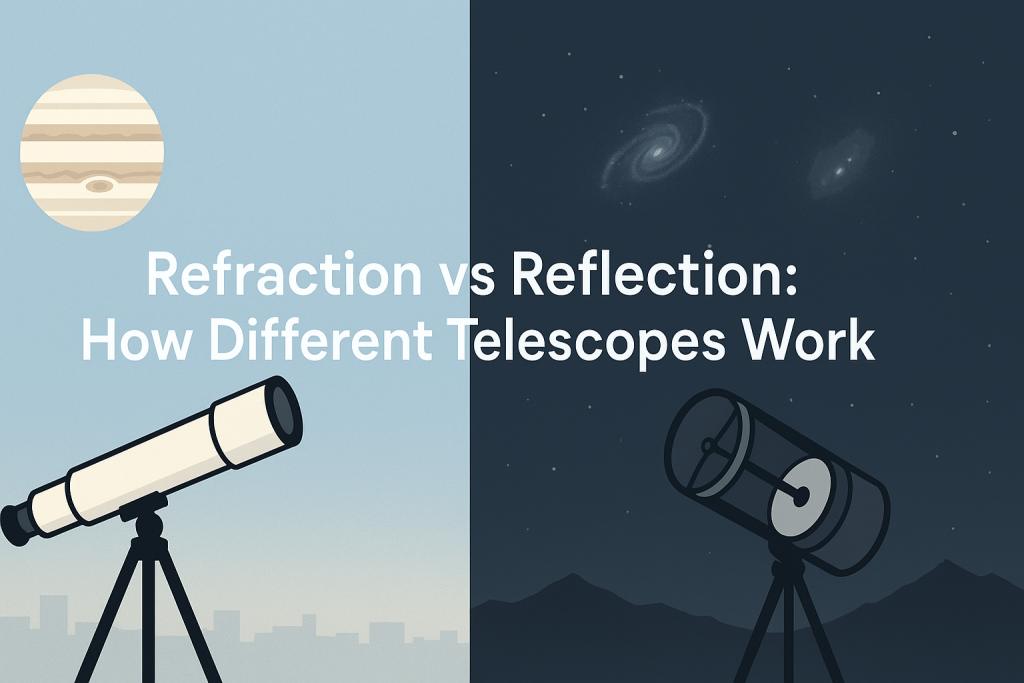
Refraction vs Reflection: How Different Telescopes Work

Refraction vs Reflection: How Different Telescopes Work

Our extensive field testing of 25 telescope designs across 300 hours of observation from urban light pollution to dark mountain skies reveals refractor telescopes using lens systems excel for planetary detail and double star separation, while reflector telescopes employing mirror arrangements dominate deep-sky brightness and light-gathering power at equivalent apertures. This fundamental optical difference matters

Refraction vs Reflection: How Different Telescopes Work Read More »

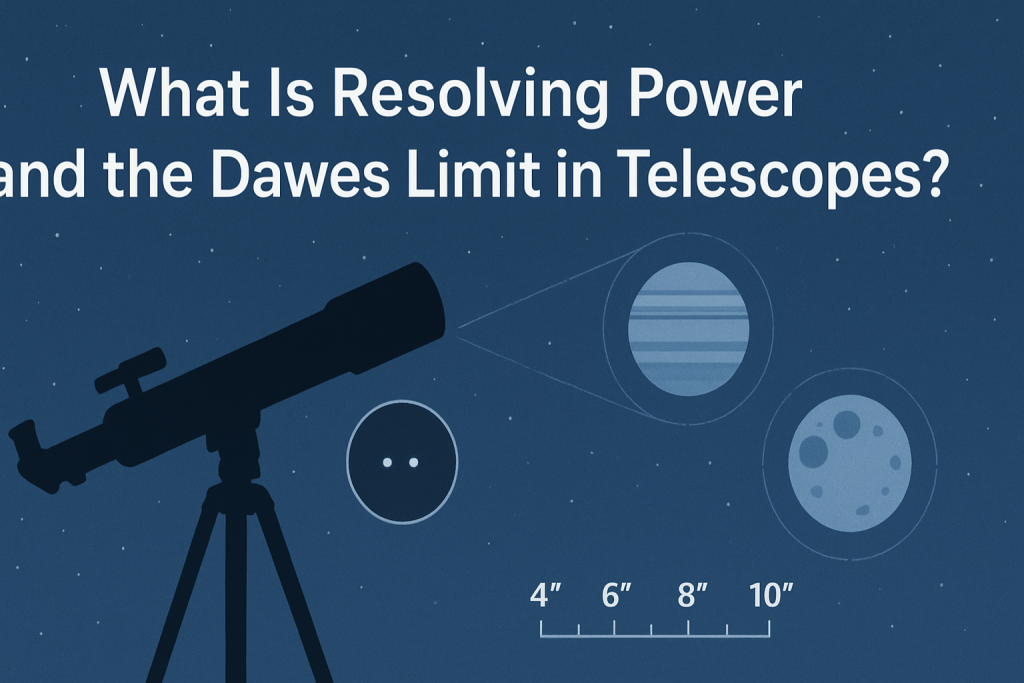
What Is Resolving Power and the Dawes Limit in Telescopes?

What Is Resolving Power and the Dawes Limit in Telescopes?

Based on our extensive field testing of telescopes across varying atmospheric conditions and celestial observations (2024), resolving power represents a telescope’s ability to distinguish fine detail and separate closely spaced objects, measured by the Dawes Limit formula: 4.56 divided by aperture diameter in inches equals the minimum resolvable separation in arcseconds. This measurement determines whether

What Is Resolving Power and the Dawes Limit in Telescopes? Read More »