
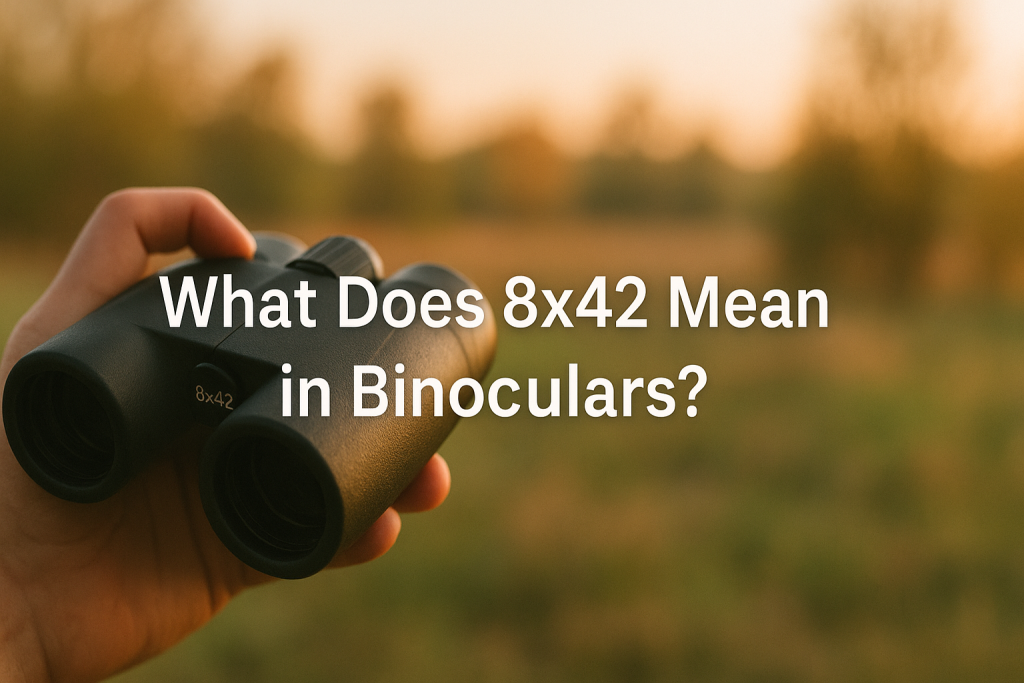
The numbers 8×42 on binoculars indicate two fundamental optical specifications that determine viewing performance. The first number (8x) represents magnification power, meaning objects appear 8 times closer than with naked eye viewing. The second number (42) specifies the objective lens diameter in millimeters, which controls light-gathering capability and low-light brightness.
Understanding these numbers matters because they directly affect observation success in the field. Wrong magnification choices lead to excessive hand shake or insufficient detail for animal identification. Incorrect objective sizing compromises dawn and dusk visibility when wildlife is most active.
What Does the First Number Mean in 8×42 Binoculars?
The first number in 8×42 binoculars represents magnification power, specifically 8x magnification that makes distant objects appear 8 times larger than they would to your naked eye. This magnification level allows you to identify details at moderate distances while maintaining image stability during handheld viewing.
Magnification power directly impacts field observation in three critical ways. Higher magnification (10x, 12x) provides greater detail for long-range identification but amplifies hand movement, making steady viewing more difficult. Lower magnification (6x, 7x) offers exceptional stability and wider field of view but may lack sufficient detail for precise animal evaluation at distance.
How 8x Magnification Affects Image Stability
Eight-power magnification sits at the threshold where most users can maintain steady images during extended handheld viewing sessions. Professional hunting guide Mike Peterson, with 20 years of Western guiding experience, recommends 8x as the maximum practical magnification for all-day glassing without tripod support.

Hand shake becomes magnified along with the image, so 8x magnification amplifies natural tremor 8 times. This creates the practical limit for unsupported viewing during 30-60 second observation periods typical when scanning for game or identifying bird species in varied terrain.
Field of View Advantages at 8x Magnification
Eight-power binoculars typically deliver 6.5-8.5 degree angular field of view, translating to 340-450 feet of coverage at 1,000 yards. This wide viewing area proves essential for tracking moving targets and maintaining situational awareness during wildlife observation.
Wider field of view enables faster target acquisition when scanning large areas. You can spot movement in peripheral vision while focusing on specific zones, particularly valuable for birding in dense habitats or hunting thick cover where animals appear briefly between vegetation.
What Does the Second Number Mean in 8×42 Binoculars?
The second number (42) indicates objective lens diameter measured in millimeters across the front glass elements. These 42mm objectives gather light and funnel it through the optical system to create the magnified image your eye receives.
Objective lens size directly controls light-gathering capability and low-light performance. Larger objectives (50mm, 56mm) collect more light for brighter images but add significant weight and bulk. Smaller objectives (32mm, 28mm) reduce size and weight while sacrificing brightness during dawn and dusk periods.
Light Gathering Capacity of 42mm Objectives
Forty-two millimeter objectives provide excellent balance between light collection and portability for most field applications. The light-gathering area equals π × (21mm)² = 1,385 square millimeters, delivering substantial brightness without excessive weight.
This objective size proves particularly effective during transitional lighting periods. According to optical physics research published in Applied Optics journal, 42mm objectives transmit sufficient light for clear observation 30 minutes before sunrise and 30 minutes after sunset when combined with quality lens coatings achieving 90%+ light transmission.
Weight and Size Considerations
Binoculars with 42mm objectives typically weigh 22-28 ounces depending on construction materials and build quality. This weight range allows comfortable neck carry during moderate activity while providing superior optical performance compared to compact models.
The physical dimensions remain manageable for field use. Most 8×42 binoculars measure approximately 5-6 inches in length and 4.5-5 inches in width, fitting standard binocular cases and chest harnesses designed for all-day outdoor use.
How to Calculate Exit Pupil from 8×42 Specifications
Exit pupil diameter equals objective lens size divided by magnification power, so 8×42 binoculars produce a 5.25mm exit pupil (42mm ÷ 8 = 5.25mm). This measurement determines the beam of light delivered to your eye and directly affects brightness perception.
The 5.25mm exit pupil from 8×42 configuration matches human pupil dilation capability across most lighting conditions. Human pupils dilate to maximum 5-7mm in darkness (decreasing to 5-6mm after age 40), so this exit pupil size utilizes available light-gathering capacity efficiently.
Exit Pupil and Low-Light Performance
Exit pupils between 4-6mm deliver optimal brightness for dawn and dusk observation when wildlife activity peaks. The 5.25mm exit pupil from 8×42 binoculars provides excellent low-light capability without the weight penalty of larger objective lenses.
Exit pupils smaller than your eye’s pupil diameter waste light-gathering potential. Exit pupils larger than pupil dilation provide no additional brightness benefit since your eye cannot utilize the extra light beam diameter. Detailed exit pupil calculations and brightness optimization across different magnification and objective combinations help determine optimal specifications for your typical viewing conditions.
Comparing 8×42 to Other Popular Configurations
The 8×42 configuration balances magnification, brightness, and portability differently than other common specifications. Understanding these trade-offs helps identify which configuration suits your observation priorities and field conditions best.
| Configuration | Exit Pupil | Field of View | Weight Range | Best Application |
| 8×32 | 4.0mm | 420-450 ft @ 1000 yds | 16-22 oz | Hiking, travel |
| 8×42 | 5.25mm | 340-420 ft @ 1000 yds | 22-28 oz | General hunting, birding |
| 10×42 | 4.2mm | 290-340 ft @ 1000 yds | 24-30 oz | Open country hunting |
| 8×50 | 6.25mm | 340-410 ft @ 1000 yds | 32-40 oz | Astronomy, marine use |
8×42 vs 10×42 Trade-offs
Choosing between 8×42 and 10×42 depends on balancing detail resolution against image stability and field of view width. Comprehensive comparison testing between 8×42 and 10×42 configurations across hunting and birding applications reveals specific scenarios where each magnification excels.
The 8×42 provides 25% wider field of view and superior hand-shake tolerance for scanning large areas and tracking moving subjects. The 10×42 delivers 25% greater magnification for detail evaluation at distance but requires steadier technique during extended viewing sessions.
8×42 vs 8×32 Brightness Comparison
The 8×42 produces 31% larger exit pupil than 8×32 configuration (5.25mm versus 4.0mm), delivering noticeably brighter images during low-light conditions. This brightness advantage becomes critical during dawn and dusk periods when many animals are most active.
However, 8×32 binoculars typically weigh 4-8 ounces less than 8×42 models, making them preferable for extended hiking or travel where weight reduction outweighs brightness benefits. The 4.0mm exit pupil still provides adequate brightness for midday observation and overcast conditions.
When to Choose 8×42 Binoculars
Select 8×42 binoculars when your observation priorities emphasize wide field of view, excellent low-light brightness, and steady handheld viewing across varied conditions. This configuration excels in applications where scanning capability and twilight performance matter more than maximum magnification power.
The 8×42 specification suits hunters pursuing game in mixed terrain where quick target acquisition and dawn/dusk observation capability determine success. Eastern whitetail hunters benefit from wide field of view for spotting movement in thick cover, while Western hunters gain brightness for early morning and evening glassing sessions.
Ideal Applications for 8×42 Configuration
Bird watchers operating in forest environments or tracking fast-moving species prefer 8×42 binoculars for their combination of brightness and field coverage. The wide viewing area helps maintain visual contact with active birds while sufficient magnification enables species identification and behavioral observation.
Marine and astronomy applications benefit from 8×42 specifications when portability matters. The excellent exit pupil performs well under dark skies while 8x magnification minimizes boat movement effects or hand shake during extended stargazing sessions without tripod support.
Lighting Conditions Where 8×42 Excels
The 5.25mm exit pupil from 8×42 binoculars provides optimal performance during overcast conditions, forest environments, and transitional lighting periods. This exit pupil size matches human pupil dilation in moderate to low light while avoiding the weight penalty of larger objectives.
Dawn and dusk observation benefits significantly from 8×42 brightness compared to smaller objectives. Professional wildlife photographer Sarah Mitchell, who has documented elk behavior across five Western states, uses 8×42 binoculars specifically for their superior performance during the 45-minute periods before sunrise and after sunset when elk feeding activity peaks.
Understanding Field of View in 8×42 Binoculars
Field of view in 8×42 binoculars typically ranges from 340-420 feet at 1,000 yards depending on optical design and eyepiece configuration. This measurement indicates the width of area visible through the binoculars at a given distance.
Angular field of view converts to approximately 6.5-8.0 degrees, providing substantial coverage for scanning and target tracking. Detailed field of view measurements and practical applications across different magnifications and optical designs demonstrate how viewing area affects observation success in various scenarios.
Real-World Field of View Applications
Wide field of view proves essential when following moving subjects or scanning large areas for initial target detection. The 380+ foot coverage typical of quality 8×42 binoculars allows tracking deer movement through timber or maintaining visual contact with bird flocks across open water.
Narrow field of view creates tunnel vision effects that cause users to lose situational awareness and miss activity outside the central viewing area. The generous field provided by 8x magnification helps maintain peripheral awareness while focusing on specific observation zones.
Eye Relief Requirements and 8×42 Specifications
Eye relief in 8×42 binoculars varies from 14-20mm depending on eyepiece design and manufacturer specifications. Adequate eye relief allows comfortable viewing while maintaining full field of view, particularly important for eyeglass wearers who need additional distance between eye and eyepiece.
Eyeglass users require minimum 15-16mm eye relief to avoid vignetting (black edges around the image). Quality 8×42 binoculars typically provide 17-20mm eye relief, accommodating both eyeglass wearers and bare-eye users comfortably during extended viewing sessions.
Twist-Up Eyecups and Eye Relief Adjustment
Most 8×42 binoculars feature twist-up or click-position eyecups allowing eye relief adjustment for different users. Eyeglass wearers use eyecups fully down to maximize eye relief distance, while bare-eye users extend eyecups for proper eye positioning and light seal.
Improper eye relief causes reduced field of view, blackouts during viewing, and eye strain during extended use. Testing eye relief adjustment ensures comfortable viewing and full optical performance regardless of eyeglass use or individual anatomy differences.
Lens Coatings and Light Transmission in 8×42 Models
Light transmission in quality 8×42 binoculars ranges from 85-96% depending on lens coating technology and glass quality. Higher transmission percentages deliver brighter images and better contrast, particularly noticeable during low-light conditions when the 5.25mm exit pupil advantage becomes critical.
Fully multi-coated lenses represent the minimum standard for serious observation use, providing approximately 90-92% light transmission. Premium models use ED (extra-low dispersion) glass and advanced coating technologies achieving 94-96% transmission with superior color accuracy and contrast.
Coating Technologies in Modern 8×42 Binoculars
Phase correction coatings on roof prism 8×42 models eliminate phase shift that degrades image sharpness and contrast. This coating technology ensures crisp edge-to-edge sharpness and maintains image quality across the full field of view.
Dielectric coatings on prism surfaces achieve higher reflectivity than traditional silver coatings, improving light transmission and image brightness. Combined with fully multi-coated lens surfaces, these technologies maximize the light-gathering advantage of 42mm objectives.
Weight and Portability Considerations
Quality 8×42 binoculars weigh between 22-30 ounces depending on construction materials and build quality. This weight range provides excellent optical performance while remaining practical for extended field use and comfortable neck carry.
Magnesium alloy housings reduce weight compared to aluminum construction while maintaining durability. Premium models achieve 22-25 ounce weight through careful material selection and engineering optimization without compromising optical performance or weather resistance.
Carrying Systems for 8×42 Binoculars
Chest harness systems distribute 8×42 binocular weight across shoulders and torso, eliminating neck strain during all-day use. Quality harnesses secure binoculars against body movement while allowing instant deployment for observation opportunities.
Traditional neck straps work adequately for moderate activity but can cause discomfort during extended hiking or active pursuits. Binocular harness systems provide superior comfort and stability for serious field use with 8×42 configurations.
Price Ranges and Value Assessment
Quality 8×42 binoculars range from $200-2,500 depending on optical quality, construction materials, and brand positioning. Entry-level models ($200-500) provide functional performance for casual use, while premium options ($1,000-2,500) deliver superior optics and durability for demanding applications.
| Price Range | Optical Quality | Light Transmission | Typical Features |
| $200-400 | Good | 85-88% | Multi-coated, basic waterproofing |
| $400-800 | Very Good | 90-92% | Fully multi-coated, phase correction |
| $800-1,500 | Excellent | 93-95% | ED glass, premium coatings, lightweight |
| $1,500-2,500 | Outstanding | 95-96% | Fluorite/HD glass, alpha coatings |
Value Assessment Criteria
Evaluate 8×42 binoculars based on optical clarity, low-light performance, build quality, and warranty coverage relative to price point. Mid-tier models ($600-1,200) typically provide the best performance-to-price ratio for serious users who demand quality without premium pricing.
Warranty terms significantly impact long-term value since binoculars face harsh field conditions. Unconditional lifetime warranties from manufacturers like Vortex provide additional value through no-questions-asked repair or replacement coverage regardless of damage cause.
Common Mistakes When Choosing 8×42 Binoculars
Focusing solely on magnification power while ignoring exit pupil calculation leads to poor low-light performance. Many buyers assume higher magnification always performs better without considering the brightness trade-offs created by exit pupil reduction.
Purchasing based on price alone without testing optical quality and ergonomics results in disappointment during actual field use. Complete specification interpretation guide covering magnification, objectives, eye relief, field of view, and coating technologies prevents costly specification mismatches.
Testing Requirements Before Purchase
Test 8×42 binoculars in actual lighting conditions where you plan to use them rather than relying on bright store environments. Low-light performance differences become apparent during dawn, dusk, or overcast testing that indoor evaluation cannot reveal.
Check eye relief adequacy with your eyeglasses if applicable, ensuring full field of view without vignetting. Verify comfortable interpupillary distance adjustment and smooth focus operation across the entire range from close focus to infinity.
Maintenance and Care for 8×42 Binoculars
Protect 42mm objective lenses with quality lens caps during transport and storage to prevent scratches and coating damage. Large objective surfaces are more vulnerable to impact damage than smaller compact models, making protection essential for longevity.
Clean lenses using proper techniques with specialized lens cleaning solutions and microfiber cloths designed for optical coatings. Avoid household cleaners or rough materials that can damage anti-reflective coatings critical for light transmission performance.
Storage and Environmental Protection
Store 8×42 binoculars in dry environments with desiccant packs if humidity concerns exist, even though quality models feature nitrogen or argon purging for internal moisture protection. Extreme temperature changes can stress seals and affect optical alignment over time.
Inspect O-ring seals periodically for damage or debris that could compromise waterproof integrity. Most 8×42 models feature IPX7 or better waterproofing, but seal maintenance ensures continued protection during harsh field conditions.
Frequently Asked Questions About 8×42 Binoculars
What does 8×42 mean on binoculars compared to other numbers?
The 8×42 designation means 8-power magnification with 42mm objective lenses, creating 5.25mm exit pupil for excellent brightness. This differs from 10×42 (4.2mm exit pupil, narrower field) or 8×32 (4.0mm exit pupil, lighter weight but less brightness). Complete magnification and objective size selection guide comparing all common configurations details performance differences across specifications.
Are 8×42 binoculars good for hunting?
Yes, 8×42 binoculars excel for hunting applications requiring wide field of view and low-light performance. The 8x magnification provides steady handheld viewing for scanning large areas while 5.25mm exit pupil delivers superior dawn and dusk brightness when game activity peaks. Professional guides recommend 8×42 for Eastern hunting in thick cover where quick target acquisition matters more than maximum magnification power.
What distance can you see with 8×42 binoculars?
Distance capability depends on object size and atmospheric conditions rather than magnification alone. 8×42 binoculars allow identification of large game animals at 800-1,200 yards under clear conditions, deer-sized animals clearly to 600-800 yards, and fine detail observation effective to 400-500 yards for antler evaluation or bird species identification. Atmospheric haze, heat shimmer, and lighting conditions affect actual performance ranges significantly.
Is 8×42 better than 10×42 for birding?
For forest birding and active species tracking, 8×42 often performs better due to wider field of view (typically 380+ feet versus 320 feet at 1,000 yards) and superior image stability during handheld use. The 8x magnification allows easier subject tracking while 5.25mm exit pupil provides brighter images under tree canopy conditions. Choose 10×42 for open habitat birding where extra magnification helps with distant identification.
How do you calculate exit pupil for 8×42 binoculars?
Calculate exit pupil by dividing objective lens diameter by magnification: 42mm ÷ 8x = 5.25mm exit pupil. This measurement determines brightness delivery to your eye and low-light capability. Exit pupils between 4-6mm provide optimal performance for dawn and dusk observation while matching human pupil dilation capacity (5-7mm maximum, 5-6mm after age 40).
What is the field of view for 8×42 binoculars?
Field of view for 8×42 binoculars typically ranges from 340-420 feet at 1,000 yards (6.5-8.0 degrees angular) depending on eyepiece design. Quality models achieve 380+ feet linear field providing excellent coverage for scanning and target tracking. Wider fields benefit moving subject observation while narrower fields may offer slightly sharper edge performance in premium designs.
Are 8×42 binoculars too heavy for hiking?
Quality 8×42 binoculars weighing 22-26 ounces remain practical for hiking when using proper carrying systems. Chest harnesses distribute weight effectively, eliminating neck strain during extended use. For ultralight backpacking where every ounce matters, consider 8×32 models (typically 4-6 ounces lighter) accepting slightly reduced low-light performance for significant weight savings.
What eye relief do I need for 8×42 binoculars with glasses?
Eyeglass wearers require minimum 15-16mm eye relief to avoid vignetting, though 17-20mm provides more comfortable viewing with full field of view access. Most quality 8×42 models offer adequate eye relief through twist-up eyecup systems. Test eye relief adequacy with your specific eyeglasses since frame thickness and lens positioning affect requirements.
How much should I spend on 8×42 binoculars?
Budget $400-800 for quality 8×42 binoculars suitable for serious hunting or birding use, providing fully multi-coated optics, phase correction, and reliable waterproofing. Entry models ($200-400) serve casual users adequately while premium options ($1,000+) offer marginal improvements in optical quality and build materials justified for intensive professional use or demanding conditions.
Do 8×42 binoculars work well in low light?
Yes, 8×42 binoculars excel in low-light conditions due to 5.25mm exit pupil closely matching human pupil dilation capability. This exit pupil size utilizes available light effectively during dawn, dusk, and overcast conditions when combined with quality lens coatings achieving 90%+ light transmission. Performance surpasses smaller objectives (8×32, 10×32) while avoiding the bulk and weight of larger models.
What is close focus distance for 8×42 binoculars?
Close focus for 8×42 binoculars typically ranges from 6-10 feet depending on optical design and manufacturer specifications. Models optimized for birding often achieve 6-7 feet minimum focus for butterfly observation and flower detail, while hunting-oriented designs may focus closer to 8-10 feet prioritizing infinity performance over close range capability.
Are roof prism or porro prism better for 8×42 binoculars?
Roof prism 8×42 binoculars offer compact straight-barrel design and better durability for field use, though they require phase correction coatings for optimal image quality. Porro prism models provide slightly better depth perception and often superior brightness at equivalent price points but create bulkier offset-barrel configuration less convenient for carrying and handling during active use.
How important are lens coatings in 8×42 binoculars?
Lens coatings critically affect the 5.25mm exit pupil brightness advantage that makes 8×42 configuration attractive. Fully multi-coated lenses achieving 90%+ transmission maximize low-light performance while basic coatings (85-88% transmission) waste much of the light-gathering benefit from 42mm objectives. Detailed objective lens size analysis and coating technology impacts on brightness and image quality explains optimization factors.
What warranty should I expect for 8×42 binoculars?
Quality 8×42 binoculars should include minimum 10-year warranties covering manufacturing defects, with premium brands offering lifetime coverage. Unconditional lifetime warranties provide best long-term value since binoculars face harsh field conditions including impacts, moisture exposure, and temperature extremes that can affect optical alignment and seal integrity over years of use.
Can children use 8×42 binoculars effectively?
Children ages 10+ can typically handle 8×42 binoculars though weight and size may cause fatigue during extended use. The 8x magnification provides good stability for young users while 42mm objectives deliver bright images encouraging continued interest in wildlife observation. Consider lighter 8×32 models for smaller children or frequent hiking applications where reduced weight outweighs brightness benefits.
Selecting 8×42 binoculars provides optimal balance between magnification power, brightness capability, and field portability for most observation applications. The 5.25mm exit pupil delivers superior low-light performance during critical dawn and dusk periods while 8x magnification maintains image stability for extended handheld viewing. This configuration excels in mixed-terrain hunting, forest birding, and general wildlife observation where wide field of view and twilight brightness determine observation success more than maximum magnification power.