
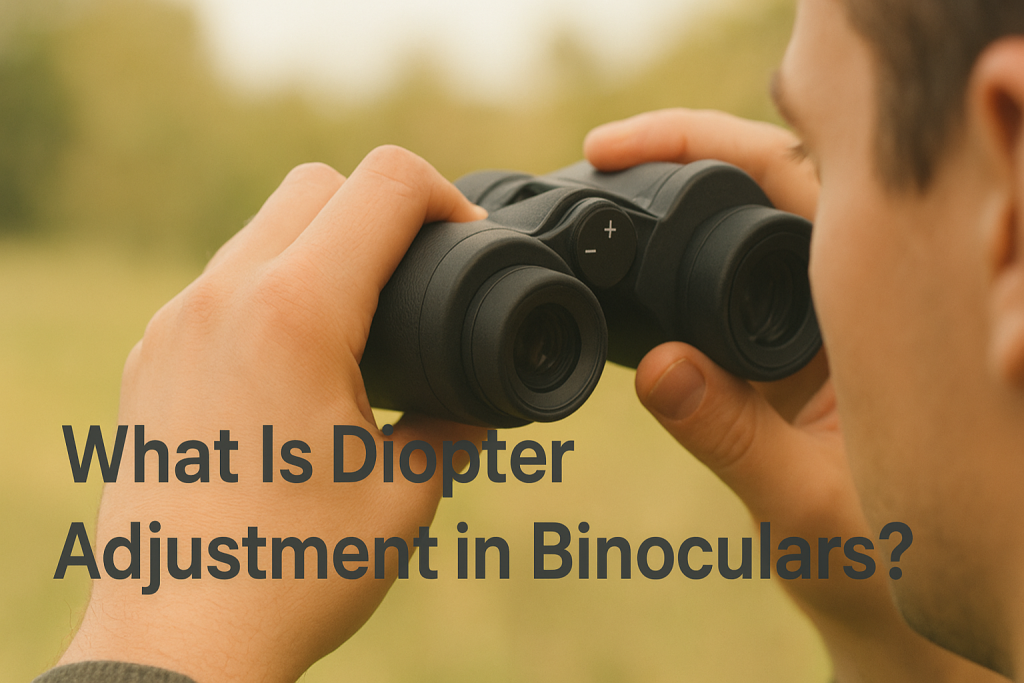
Diopter adjustment in binoculars allows you to compensate for vision differences between your eyes, ensuring sharp focus in both eyes simultaneously for optimal image clarity and comfortable viewing. This crucial feature typically appears as a rotating ring or dial on one eyepiece (usually the right) that fine-tunes focus independently from the central focusing mechanism.
Proper diopter adjustment eliminates eye strain, reduces focusing time in the field, and maximizes the optical performance you paid for in quality binoculars.
Most hunters and birders never properly set their diopter adjustment, missing sharp images and experiencing unnecessary eye fatigue during extended glassing sessions. This complete guide explains diopter function, provides step-by-step adjustment procedures, and troubleshoots common focusing problems affecting observation success.
What Is Diopter Adjustment and Why Does It Matter for Sharp Vision?
Diopter adjustment compensates for refractive differences between your left and right eyes, allowing both eyes to achieve sharp focus on the same distant object simultaneously without strain. This independent focusing mechanism works separately from your binoculars’ central focus wheel, providing fine-tuning capability measured in diopter units from typically -4 to +4 diopters.
The diopter system matters because most people have slight vision differences between eyes, even with 20/20 vision or corrective lenses. Without proper diopter setting, one eye works harder to compensate for the other’s focusing difference, causing fatigue, headaches, and reduced observation effectiveness during hunting or birding sessions lasting more than 30 minutes.

Diopter adjustment consists of a rotating collar or ring positioned on the right eyepiece of most binocular designs, marked with plus and minus scales indicating correction strength. This mechanism works with your binoculars’ optical system to ensure both optical paths deliver identically focused images to your brain, creating comfortable binocular vision without the eye strain associated with mismatched focus.
Premium binoculars like 10×42 hunting binoculars feature lockable diopter rings preventing accidental adjustment during field use, while budget models may have simple rotating collars requiring occasional rechecking.
How to Properly Set Your Binocular Diopter: Step-by-Step Guide
Setting your diopter adjustment correctly requires systematic focusing using your binoculars’ dual focusing system in the proper sequence to achieve optimal sharpness for your specific vision.
Initial Setup and Eye Identification
Start by identifying which eyepiece contains your diopter adjustment ring, typically the right eyepiece marked with diopter scale numbers from -4 to +4. Cover the objective lens (front lens) corresponding to your diopter-equipped eyepiece, usually the right objective lens, forcing you to view through only your left eye and left optical path.
Look at a high-contrast target 100-300 yards away such as tree branches against sky, building edges, or fence posts. Use only your central focus wheel to achieve the sharpest possible image in your uncovered eye, ignoring the diopter ring completely during this step.
Central Focus Wheel Optimization
Rotate your central focus wheel slowly in both directions while viewing your distant target through the uncovered eyepiece until you achieve maximum sharpness and contrast. Fine-tune focus by making small adjustments and allowing your eye 2-3 seconds to evaluate each focus position without straining.
Your central focus wheel now provides optimal focus for whichever eye you used (typically left eye if diopter is on right eyepiece). Lock this central focus position mentally and avoid touching the central focus wheel during the next diopter adjustment phase.
Diopter Ring Adjustment Process
Switch your lens cover to the opposite objective lens, now viewing through only the eyepiece equipped with diopter adjustment while keeping the central focus wheel in the position you just established. Your image will likely appear blurry since the diopter hasn’t been set for your second eye’s requirements.
Rotate the diopter adjustment ring slowly while maintaining focus on the same distant target until you achieve sharp focus matching the clarity you achieved with your first eye. Make small incremental adjustments, allowing your eye to relax between changes to avoid focusing strain that masks proper diopter setting.
Final Verification and Testing
Remove all lens covers and view your target with both eyes simultaneously through properly adjusted binoculars. The image should appear sharp, comfortable, and free from eye strain with no tendency for one eye to dominate or shut off involuntarily.
Test your diopter setting by viewing objects at various distances from 50 yards to infinity, using only the central focus wheel for distance changes. If you experience eye strain, double images, or difficulty maintaining comfortable focus, repeat the diopter adjustment process with greater precision.
For ongoing field use, note your final diopter setting position and mark it with tape or memory for quick reestablishment if the ring moves accidentally. Many hunters find their diopter setting remains constant for years unless vision changes occur.

Understanding Diopter Scales and Measurements
Binocular diopter scales typically range from -4 to +4 diopters, with zero representing neutral adjustment where both optical paths provide identical focus characteristics. Negative diopter settings (-1, -2, -3, -4) compensate for nearsighted differences in the adjusted eye, while positive settings (+1, +2, +3, +4) correct farsighted differences.
Each diopter unit represents a significant optical adjustment equivalent to focusing differences you’d experience when switching between targets at vastly different distances. Most users require diopter adjustments between -2 and +2 diopters, with settings beyond ±3 diopters indicating substantial vision differences requiring eye examination.
The diopter scale works independently of your central focusing mechanism, allowing infinite fine-tuning within its adjustment range. Premium binoculars provide precise diopter scales with half-diopter markings for users requiring exact adjustment, while budget models may offer only whole-number increments limiting fine-tuning precision.
Understanding your personal diopter setting helps when evaluating new binoculars, as extreme diopter requirements (±3 or ±4) may indicate vision correction needs or help explain difficulty achieving comfortable focus with previous optics.
Common Diopter Adjustment Problems and Solutions
Image Appears Sharp But Causes Eye Strain
Eye strain despite apparently sharp focus usually indicates incomplete diopter adjustment or adjustment performed under improper lighting conditions. Bright sunlight or artificial lighting can mask subtle focus differences that become apparent during extended viewing periods.
Readjust your diopter during moderate lighting conditions similar to your typical field use, spending more time fine-tuning each eye’s focus. Allow 3-5 seconds between diopter adjustments for your eyes to relax and provide accurate feedback about optimal focus position.
Diopter Ring Moves During Field Use
Accidental diopter movement destroys your carefully established focus balance, requiring readjustment or field marking to restore proper setting. Some binoculars feature lockable diopter rings preventing movement, while others rely on friction or detent systems offering limited security.
Mark your optimal diopter position with small tape pieces or permanent marker dots allowing quick visual reestablishment of correct adjustment. Check diopter setting before critical observation sessions, as even small movements significantly impact focus quality and eye comfort.
Cannot Achieve Sharp Focus at Any Diopter Setting
Inability to achieve sharp focus across the entire diopter range suggests vision differences exceeding your binoculars’ adjustment capability, dirty optics, or mechanical focus problems requiring professional service. First clean all lenses thoroughly using appropriate lens cleaning materials and retry the adjustment process.
If cleaning doesn’t resolve focus problems, your vision differences may exceed ±4 diopter correction range, requiring consultation with an eye care professional about prescription eyewear or selection of binoculars with wider diopter adjustment ranges available in some premium models.

Double Image or Overlapping Images
Double imaging typically indicates misaligned optical paths or collimation problems requiring professional repair rather than diopter adjustment solutions. However, severe diopter misadjustment can create apparent double imaging as your brain struggles to merge drastically different focus qualities from each eye.
Restart the complete diopter adjustment process, ensuring you establish central focus for one eye completely before adjusting the diopter for the second eye. If double imaging persists after proper adjustment, the binoculars likely require professional optical service or replacement.
Diopter Adjustment for Different Vision Conditions
Eyeglass Wearers and Diopter Settings
Eyeglass wearers should perform diopter adjustment while wearing their normal corrective lenses, ensuring the adjustment compensates for any residual vision differences not corrected by prescription eyewear. Use binoculars with adequate eye relief (minimum 14mm, ideally 17mm+) preventing vignetting with glasses in place.
Some eyeglass wearers achieve better results removing glasses and adjusting diopters to compensate for prescription differences, particularly with single-vision distance prescriptions. This approach requires testing both methods to determine which provides superior comfort and image quality for your specific vision correction needs.
Our detailed guide on optimizing binocular adjustment for individual vision requirements covers eyeglass compatibility, eye relief optimization, and alternative focusing techniques for various corrective lens prescriptions.
Age-Related Vision Changes
Presbyopia and other age-related vision changes may require periodic diopter readjustment as your eyes’ focusing abilities evolve over time. Users over 40 should recheck diopter settings annually or when experiencing new eye strain symptoms during binocular use.
Progressive lens wearers face additional complexity as different portions of their corrective lenses provide varying distance correction affecting diopter requirements. Experiment with head positioning and lens areas while performing diopter adjustment to identify optimal viewing technique.
Astigmatism and Irregular Vision Correction
Significant astigmatism may prevent achieving perfectly sharp focus through standard diopter adjustment alone, as binocular diopter systems correct only spherical focus differences rather than cylindrical astigmatism correction. Maintain corrective eyewear for optimal astigmatism correction while using minimal diopter adjustment for residual differences.
Users with irregular corneas, previous eye surgery, or complex prescription requirements should work with eye care professionals to optimize their vision correction before attempting binocular diopter adjustment for best results.
Maintaining Your Diopter Adjustment System
Diopter adjustment mechanisms require minimal maintenance but benefit from periodic cleaning and lubrication to ensure smooth operation and prevent seizing in harsh field conditions. Remove accumulated dirt, sand, or moisture from diopter threads using soft brushes and appropriate cleaning solutions.

Avoid over-tightening or forcing diopter rings that become stiff, as excessive pressure can damage internal threads or optical alignment requiring expensive professional repair. Apply light mechanical lubricant to external threads if manufacturer specifications permit, ensuring no lubricant contacts optical surfaces.
Store binoculars with diopter settings in moderate positions (near zero) rather than extreme settings to reduce long-term stress on adjustment mechanisms. Extreme diopter positions maintained for extended periods may affect calibration accuracy or mechanical reliability.
Check diopter calibration annually by repeating the complete adjustment process, comparing your optimal settings to previous positions to identify any mechanical drift or personal vision changes requiring accommodation.
Advanced Diopter Techniques for Specialized Applications
Competition and Precision Observation
Competitive birding, wildlife photography, and precision hunting applications demand perfect diopter adjustment for extended observation periods without fatigue. Perform diopter adjustment under lighting conditions matching your primary field use rather than indoor or excessively bright conditions that mask subtle focus differences.
Consider professional vision testing to identify precise refractive differences between eyes, allowing more informed diopter adjustment and potential selection of binoculars with appropriate adjustment ranges for your specific vision profile.
Multiple User Binoculars
Binoculars shared among family members or field partners require systematic diopter recording for each user, allowing quick adjustment changes without complete refocusing procedures. Create reference cards listing each user’s optimal diopter setting and interpupillary distance for rapid configuration changes.
Some users benefit from colored tape or marker systems identifying their personal diopter positions, enabling immediate recognition and adjustment in low-light conditions where scale numbers become difficult to read.
Extreme Environment Considerations
Cold weather can affect diopter ring operation as lubricants thicken and metal contracts, potentially changing calibration or mechanical feel. Warm binoculars gradually to room temperature before making precise diopter adjustments in extreme cold conditions.
Desert and beach environments introduce sand and salt that can damage diopter mechanisms, requiring more frequent cleaning and protection during storage. Consider protective binocular cases with sealed compartments preventing environmental contamination of adjustment mechanisms.
When to Seek Professional Help
Several diopter-related problems require professional optical service rather than user adjustment, including mechanical failure, calibration drift, or optical misalignment affecting focus quality. If your diopter ring becomes loose, overly tight, or fails to hold adjustments, professional service can restore proper mechanical function.

Optical collimation problems creating double images, focus shift between diopter positions, or inability to achieve sharp focus across the adjustment range typically indicate internal optical misalignment requiring specialized equipment and expertise to correct.
Vision-related issues preventing successful diopter adjustment may indicate eye health changes requiring professional eye care evaluation rather than equipment modification. Sudden changes in required diopter settings, persistent eye strain despite proper adjustment, or inability to achieve comfortable binocular vision warrant eye examination.
Consider professional service for vintage or high-value binoculars experiencing diopter problems, as improper repair attempts can reduce optical performance and collectible value. Authorized service centers maintain proper adjustment equipment and replacement parts ensuring optimal restoration.
Frequently Asked Questions About Diopter Adjustment
Which eyepiece has the diopter adjustment?
Most binoculars feature diopter adjustment on the right eyepiece, marked with a scale ranging from -4 to +4 diopters for vision difference compensation. Some European models place diopter adjustment on the left eyepiece, while a few premium models offer dual diopter adjustment on both eyepieces.
The diopter-equipped eyepiece typically has a rotating collar or ring with numerical markings, distinguishing it from the standard eyepiece that focuses only through the central wheel. Check your binocular manual to confirm diopter location, as placement varies by manufacturer and model design.
How often should I readjust my diopter setting?
Properly set diopter adjustments remain stable for months or years unless your vision changes or the adjustment ring moves accidentally during field use. Check diopter settings annually or when experiencing new eye strain, focusing difficulties, or changes in your prescription eyewear.
Age-related vision changes, particularly after age 40, may require more frequent diopter rechecking as presbyopia and other focusing changes develop. Monitor comfort and focusing ease during extended observation sessions to identify when readjustment becomes necessary.
Can I use binoculars without adjusting the diopter?
Using binoculars without proper diopter adjustment causes eye strain, reduces image sharpness, and limits comfortable viewing time, particularly during extended glassing sessions exceeding 30 minutes. While you may achieve apparent sharpness through central focusing alone, uncompensated vision differences between eyes create fatigue and suboptimal optical performance.
Skipping diopter adjustment wastes the optical quality you paid for in premium binoculars and may cause headaches or focusing difficulties during critical observation periods when wildlife identification or target evaluation demands sustained attention.
What does the zero position mean on diopter scales?
Zero position on diopter scales represents neutral adjustment where both optical paths provide identical focus characteristics without vision difference compensation. Users with perfectly matched vision between eyes typically use zero diopter settings, though most people require some adjustment due to natural vision variations.
The zero position serves as a baseline for adjustment, with negative numbers correcting nearsighted differences and positive numbers correcting farsighted differences in the diopter-equipped eye relative to the other eye.
Why do I see double images even after diopter adjustment?
Double imaging after proper diopter adjustment typically indicates optical collimation problems, damaged prisms, or misaligned optical paths requiring professional repair rather than user adjustment solutions. These mechanical issues exceed diopter correction capabilities and need specialized optical service.
Temporary double imaging immediately after diopter changes may represent eye adaptation time, as your brain adjusts to new focus balance between eyes. Allow 30-60 seconds for comfortable binocular vision to establish after diopter modifications before determining adjustment success.
Can children use the same diopter settings as adults?
Children typically require different diopter settings than adults due to developing vision systems, smaller interpupillary distances, and different refractive characteristics. Each user should establish their personal diopter setting through the complete adjustment process regardless of age.
Adult diopter settings rarely work for children, and using incorrect adjustments can cause eye strain or focusing difficulties that discourage young people from enjoying binocular observation activities. Take time to properly adjust diopters for each family member using binoculars.
Do expensive binoculars have better diopter systems?
Premium binoculars typically feature more precise diopter scales, lockable adjustment rings, and wider adjustment ranges compared to budget models, providing superior customization for individual vision requirements. High-end models may offer half-diopter increments and mechanical locks preventing accidental movement during field use.
However, proper diopter adjustment technique matters more than equipment cost for achieving comfortable focus. Budget binoculars with careful diopter adjustment often provide better results than premium optics used without proper setting for individual vision differences.
Should I adjust diopters while wearing eyeglasses?
Eyeglass wearers should perform diopter adjustment while wearing their normal corrective lenses, ensuring binocular focus optimization matches their typical vision correction setup. This approach provides consistency between binocular use and other daily activities requiring distance vision.
Some single-vision distance prescription users achieve better results removing glasses and using diopter adjustment to compensate for prescription differences, but this requires testing both approaches to determine which provides superior image quality and comfort for specific vision needs.
For more detailed information about optimizing focus quality, our comprehensive guide on achieving sharp focus in both eyes through proper diopter techniques covers advanced adjustment procedures and troubleshooting methods.
What causes my diopter ring to move during use?
Diopter rings move during field use due to inadequate friction systems, accidental contact during binocular handling, or mechanical wear reducing adjustment tension over time. Budget binoculars often lack positive detents or locking mechanisms allowing easy accidental adjustment.
Prevent diopter movement by marking optimal positions with tape, upgrading to binoculars with lockable diopter rings, or having loose mechanisms serviced to restore proper adjustment tension. Regular diopter position checking ensures maintained focus quality during critical observation sessions.
Can I damage my eyes with incorrect diopter settings?
Incorrect diopter settings cause eye strain, fatigue, and headaches but do not permanently damage healthy eyes, as your visual system adapts to focus differences through natural accommodation mechanisms. However, prolonged use of severely misadjusted diopters can create temporary focusing difficulties requiring recovery time.
Users with existing eye conditions, recent eye surgery, or complex vision problems should consult eye care professionals before making significant diopter adjustments, as optimal settings may differ from standard adjustment procedures for specialized vision requirements.
How do I know if my diopter adjustment is perfect?
Perfect diopter adjustment produces sharp, comfortable binocular vision without eye strain during extended viewing sessions, with both eyes contributing equally to image formation without one eye dominating or shutting off involuntarily. Test adjustment quality by observing fine details at various distances for 5-10 minutes without fatigue.
Optimal settings allow rapid target acquisition, smooth focus transitions using only the central wheel, and comfortable viewing for 30+ minutes without headaches or focusing difficulties. If you experience any discomfort or vision problems, repeat the adjustment process with greater precision.
Why do some binoculars have diopter adjustment on both eyepieces?
Dual diopter systems on both eyepieces provide maximum customization for users with significant vision differences or specialized applications requiring precise optical matching. This design allows independent adjustment of both optical paths rather than compensating through single-eyepiece correction.
Most users find single diopter adjustment sufficient for vision difference compensation, but dual systems benefit users with extreme refractive differences, professional applications requiring perfect optical balance, or shared binoculars serving multiple users with varying vision requirements.
To understand how diopter adjustment integrates with other optical systems, explore our detailed explanation of individual binocular components and their functions for complete optical knowledge.
Can I convert binoculars without diopter adjustment?
Adding diopter adjustment to binoculars originally designed without this feature requires extensive optical modifications exceeding the cost of replacement with properly equipped models. The conversion involves precision optical work, custom parts fabrication, and potential compromise of original optical performance.
Users requiring diopter adjustment should select binoculars designed with this feature rather than attempting aftermarket modifications. Most modern binoculars include diopter adjustment as standard equipment, making conversion unnecessary for new purchases.
Proper diopter adjustment transforms binocular viewing from a strain-inducing compromise into comfortable, sharp observation enabling extended field sessions and optimal optical performance. Taking time to establish correct settings for your individual vision pays dividends in observation success, eye comfort, and equipment satisfaction throughout years of field use. Master this fundamental technique to unlock the full potential of quality optics and enhance every outdoor observation experience from hunting and birding to astronomy and nature study.