Optics Core

ED Glass vs HD Glass in Binoculars: Are They the Same?

ED Glass vs HD Glass in Binoculars: Are They the Same?

ED glass and HD glass in binoculars are not the same technology, though both aim to improve optical performance through different approaches. ED (Extra-low Dispersion) glass uses specialized optical materials with unique refractive properties to minimize chromatic aberration by up to 90% compared to standard crown glass, while HD (High Definition) typically refers to enhanced […]

ED Glass vs HD Glass in Binoculars: Are They the Same? Read More »

What Is ED Glass in Binoculars? Unlock Superior Clarity

What Is ED Glass in Binoculars?

ED glass in binoculars refers to Extra-Low Dispersion glass elements designed to minimize chromatic aberration and deliver superior color accuracy, contrast, and image sharpness compared to standard optical glass. This specialized glass technology contains fluorite crystals or synthetic materials that reduce color fringing by up to 90%, providing hunters, birders, and astronomy enthusiasts with crisp,

What Is ED Glass in Binoculars? Unlock Superior Clarity Read More »

What Is Fully Multi-Coated Lens in Binoculars? Max Clarity

What Is Fully Multi-Coated Lens in Binoculars?

Fully multi-coated lens technology represents the pinnacle of optical performance in binoculars, applying multiple layers of anti-reflective coatings to every glass-to-air surface throughout the optical system including objective lenses, prisms, and eyepiece elements. This coating process achieves 90-95% light transmission compared to 75-85% in coated or multi-coated designs, delivering noticeably brighter images during critical dawn

What Is Fully Multi-Coated Lens in Binoculars? Max Clarity Read More »

BAK4 vs BAK7 Prism Glass: Full Comparison – Why It Matters

BAK4 vs BAK7 Prism Glass: Full Comparison

BAK4 prism glass delivers superior optical performance through higher refractive index (1.568) and lower critical angle (38.7°) compared to BAK7 glass (1.516 refractive index, 41.2° critical angle), resulting in 92-95% light transmission versus 85-90% for BAK7 in quality binoculars and spotting scopes. This optical physics difference matters because BAK4’s higher density eliminates internal light scattering

BAK4 vs BAK7 Prism Glass: Full Comparison – Why It Matters Read More »

What Is Twilight Factor in Binoculars? Boost Low-Light Views

What Is Twilight Factor in Binoculars?

Twilight factor in binoculars determines low-light performance by calculating the square root of magnification multiplied by objective lens diameter, with higher numbers indicating better dawn and dusk observation capability. A 10×50 binocular achieves 22.4 twilight factor (√10 × 50), delivering superior image brightness compared to 10×42 configuration’s 20.5 twilight factor during critical hunting and wildlife

What Is Twilight Factor in Binoculars? Boost Low-Light Views Read More »

What Does 10×50 Mean in Binoculars? Master Low-Light Viewing

What Does 10x50 Mean in Binoculars?

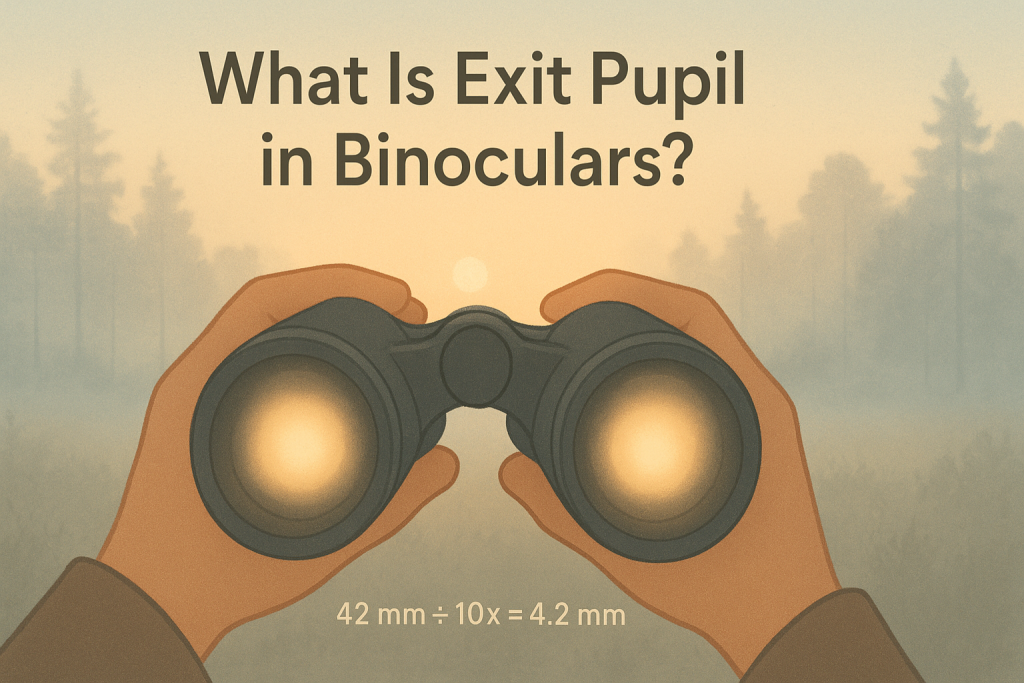
The “10×50” marking on binoculars means you get 10-power magnification with 50mm objective lenses, creating a 5mm exit pupil (50mm ÷ 10x = 5mm) that matches peak human pupil dilation for superior low-light observation during dawn and dusk periods. This specification delivers exceptional brightness for early morning bird identification and late evening game spotting when

What Does 10×50 Mean in Binoculars? Master Low-Light Viewing Read More »