
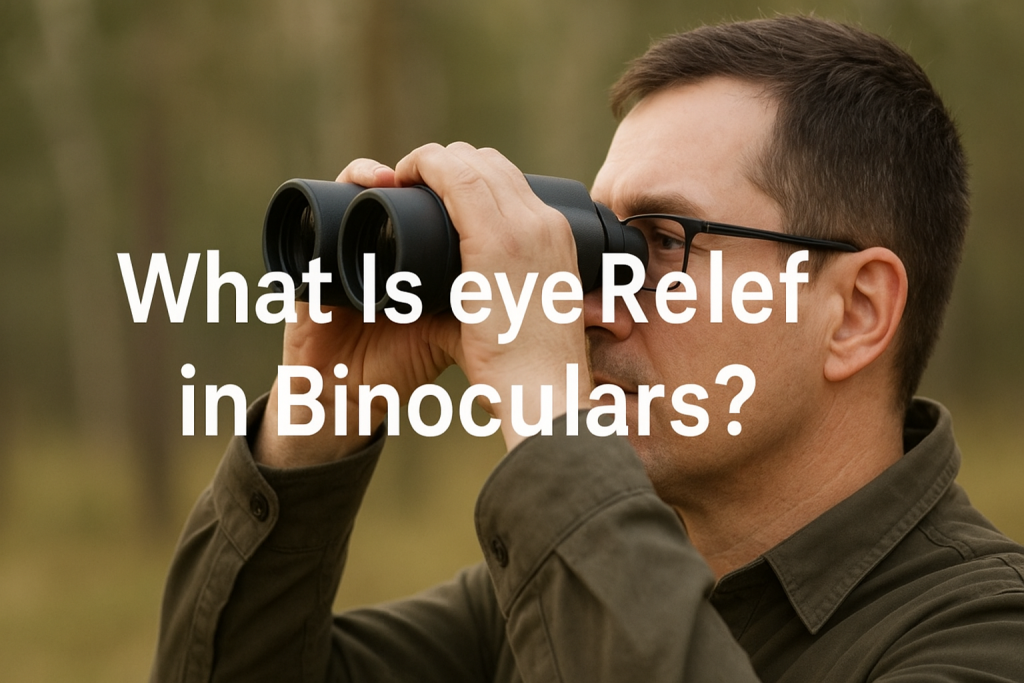
Eye relief in binoculars measures the distance between the eyepiece lens and your eye where you can see the complete field of view without dark edges or vignetting. Proper eye relief ranges from 14mm to 20mm, with 15mm serving as the minimum standard for comfortable viewing and 17mm or greater required for eyeglass wearers to maintain full field visibility.
This specification determines viewing comfort during extended glassing sessions and whether you can use binoculars while wearing eyeglasses.
Understanding eye relief becomes critical when selecting binoculars for hunting, birding, or astronomy where prolonged observation sessions strain your eyes without adequate distance. Insufficient eye relief forces you to press your eyes uncomfortably close to the eyepieces, causing fatigue and limiting your ability to maintain steady viewing position during critical moments.
What Is Eye Relief and Why Does It Matter for Optical Performance?
Eye relief represents the optimal distance your eye must maintain from the eyepiece lens surface to capture the complete image circle projected by the binocular’s optical system. This distance typically ranges from 9mm in compact binoculars to 23mm in premium long eye relief models designed specifically for eyeglass compatibility.
The measurement determines your viewing comfort and image quality because positioning your eye too close or too far from the eyepiece creates vignetting (dark circular borders around the image). Proper eye relief positioning allows the full light cone from the exit pupil to reach your eye’s pupil, maximizing brightness and field of view.

Eyeglass wearers require minimum 15mm eye relief to accommodate the 12-14mm distance between eyeglass lenses and eyes. Standard eye relief of 11-14mm forces eyeglass users to remove their glasses, requiring refocus adjustment and losing astigmatism correction that impacts image sharpness.
Eye relief directly affects field of view accessibility because insufficient distance truncates the visible image area. A 10×42 binocular with 12mm eye relief might deliver only 85% of its rated 330-foot field of view to eyeglass wearers, reducing peripheral vision essential for tracking moving wildlife or scanning wide areas during birding.
How to Calculate Eye Relief Requirements for Your Viewing Needs
Measure your personal eye relief requirement by determining the distance between your eyeglass lenses and your eyes using a ruler. Most eyeglass wearers measure 12-14mm from lens to eye surface, requiring binocular eye relief of 16-18mm minimum to maintain 2-4mm clearance preventing lens contact.
Add 2mm safety margin to your measurement for comfortable extended viewing without eyepiece contact during head movement or binocular adjustment. If your eyeglass-to-eye distance measures 13mm, select binoculars with minimum 15mm eye relief, though 17mm provides more comfortable clearance.
For non-eyeglass users, eye relief between 11mm and 16mm provides comfortable viewing for most face shapes and eye socket depths. Deeper-set eyes may require longer eye relief (15-16mm) while prominent eyes work well with standard 11-14mm specifications.
Consider your primary viewing activities when calculating requirements. Hunting and birding involving quick target acquisition benefit from longer eye relief (16-20mm) allowing faster eye positioning, while astronomy observations requiring precise alignment work effectively with standard 12-15mm eye relief.
Testing Eye Relief Before Purchase
Position binoculars at arm’s length and look through the eyepieces to locate the bright circular image (exit pupil). Slowly bring binoculars toward your eyes until the full bright circle fills your vision without dark edges.
The distance where you achieve complete bright image represents functional eye relief for your eye anatomy. Compare this distance to manufacturer specifications, noting that your personal anatomy may require different positioning than the rated specification suggests.
Eye Relief Variations by Magnification
Higher magnification binoculars typically offer reduced eye relief due to optical design constraints in the eyepiece. A 10×42 model commonly provides 15-17mm eye relief while a 12×50 configuration from the same manufacturer may deliver only 13-15mm.
Compact binoculars (8×25, 10×25) often compromise eye relief to achieve small size, typically offering 9-12mm that proves inadequate for eyeglass wearers. Full-size binoculars (8×42, 10×42) generally provide superior eye relief ranging from 14-20mm across most manufacturers.
Long Eye Relief Binoculars vs Standard Eye Relief: Which Performs Better?
Long eye relief binoculars (18-23mm) accommodate all eyeglass prescriptions and provide comfortable viewing for extended periods, making them ideal for professional use or users with thick eyeglass lenses. However, achieving long eye relief often requires optical compromises that may affect image quality or increase size and weight.
Standard eye relief models (12-16mm) typically deliver superior optical performance through simpler eyepiece designs with fewer lens elements, resulting in higher light transmission and sharper image quality. These models work well for non-eyeglass users and those with thin eyeglass lenses who can position closer to eyepieces.
Field of view differences become apparent between designs, with long eye relief models sometimes offering 5-10% narrower fields due to optical constraints. A standard 10×42 binocular might provide 330 feet at 1,000 yards while a long eye relief version delivers 310 feet at the same distance.
Weight and size penalties accompany long eye relief designs, typically adding 2-4 ounces and increasing eyepiece diameter. Lightweight binocular designs optimized for extended field carry often sacrifice eye relief to achieve minimum weight, creating trade-offs between comfort and portability.
Optical Quality Trade-offs
Long eye relief eyepieces require additional lens elements to project the image farther from the eyepiece surface, potentially reducing light transmission by 2-5% compared to standard designs. Premium manufacturers minimize this impact through advanced lens coatings and high-quality glass, while budget models may show noticeable brightness reduction.
Edge sharpness can suffer in long eye relief designs as the complex eyepiece optics struggle to maintain image quality across the entire field of view. This affects birding and hunting applications where peripheral sharpness helps identify movement or track fast-moving targets.
Cost Considerations
Long eye relief binoculars typically cost 15-25% more than standard models due to complex eyepiece construction requiring additional lens elements and precision manufacturing. Budget options under $300 rarely offer quality long eye relief, while premium models from Zeiss, Swarovski, and Leica provide excellent long eye relief performance at $1,500-3,000 price points.
Eye Relief Requirements for Different Applications
Hunting applications demand eye relief matching your typical eyewear and environmental conditions. Western big game hunters wearing sunglasses or prescription eyewear need 16-18mm minimum eye relief to maintain full field of view during critical moments when game appears at distance.
Birding requires comfortable eye relief for extended observation sessions lasting hours, with 15-17mm providing optimal balance between comfort and optical performance. Specialized birding binoculars designed for eyeglass compatibility address the unique eye relief challenges faced by birders who cannot remove corrective lenses.
Marine and boating applications benefit from longer eye relief (17-20mm) accommodating sunglasses essential for water glare protection while maintaining stability during vessel movement. Marine binoculars with integrated compass systems typically prioritize longer eye relief for cockpit use where eyewear changes frequently.
Astronomy observations work effectively with standard eye relief (12-15mm) since viewing occurs in controlled positions without urgent target acquisition needs. However, cold weather astronomy may require longer eye relief to accommodate face protection and prevent eyepiece fogging from breath contact.
Professional and Commercial Requirements
Security and surveillance professionals require 18-20mm eye relief to accommodate various eyewear including safety glasses, prescription lenses, and protective equipment. The ability to quickly acquire targets while wearing different eyewear configurations makes long eye relief essential for operational effectiveness.
Wildlife research and scientific applications demand consistent eye relief across multiple users with varying eyewear needs. Research teams sharing binoculars benefit from 17-19mm eye relief accommodating different users without constant adjustment or eyewear removal.
Adjusting Eye Relief for Optimal Viewing Performance
Most binoculars provide adjustable eye relief through rotating or sliding eyecups that modify the distance between your eye and the eyepiece lens. Proper adjustment creates the optimal viewing distance for your specific anatomy and eyewear configuration.
For eyeglass wearers, retract eyecups fully to minimize distance and maximize available eye relief. The eyecups should sit at their lowest position, allowing your eyeglasses to rest close to the eyepiece housing while maintaining adequate clearance to prevent lens contact.
Non-eyeglass users typically extend eyecups to their full height, creating proper eye positioning and preventing stray light from entering around the edges. Full extension also helps maintain consistent eye placement during extended viewing sessions and reduces eyestrain from incorrect positioning.
Test different eyecup positions while viewing a fixed target to identify the setting that provides the brightest, sharpest image with complete field of view. The optimal position eliminates dark edges (vignetting) while maximizing image brightness and clarity across the entire viewing area.
Eyecup Types and Adjustment Mechanisms
Twist-up eyecups offer multiple intermediate positions between fully retracted and fully extended, allowing fine-tuning for individual users. Quality twist-up mechanisms provide secure positioning without drift during use, while inferior designs may slip during extended observation sessions.
Sliding eyecups provide smooth adjustment but may lack intermediate locking positions, potentially limiting customization options. However, sliding mechanisms typically prove more durable than twist-up designs and resist jamming from dirt or moisture infiltration.
Fixed eyecups eliminate adjustment complexity but cannot accommodate different user requirements, making them suitable only when all users share similar eyewear and anatomical needs. Professional applications requiring user flexibility avoid fixed eyecup designs.
Common Eye Relief Problems and Solutions
Vignetting (dark circular borders around the image) indicates incorrect eye positioning relative to the exit pupil, typically caused by insufficient eye relief or improper eyecup adjustment. Move your head closer or farther from the eyepieces until the dark border disappears and the full bright image appears.
Eye strain during extended viewing often results from forcing your eyes too close to eyepieces with inadequate eye relief for your anatomy. This creates unnatural viewing angles and forces eye muscles to work harder, causing fatigue within 15-20 minutes of continuous use.
Inconsistent field of view between left and right eyes usually stems from uneven eye positioning caused by asymmetrical eyecup settings or worn adjustment mechanisms. Check that both eyecups extend to identical positions and adjust individually if your binocular design permits independent eyecup control.
Eyeglass lens contact with eyepieces scratches expensive prescription lenses and indicates insufficient eye relief for your eyewear thickness. Either select binoculars with longer eye relief specifications or consider contact lenses for outdoor activities requiring binocular use.
Environmental Factors Affecting Eye Relief
Cold weather may require slightly longer eye relief to prevent eyepiece fogging from breath contact, especially during extended glassing sessions in sub-freezing temperatures. Position your eyes 1-2mm farther than normal warm-weather distance to maintain clear optics.
Bright sunlight conditions often necessitate sunglasses that add thickness between your eyes and binocular eyepieces, effectively requiring 2-3mm additional eye relief. Consider binoculars with 18-20mm eye relief if you frequently observe in bright conditions requiring eye protection.
Helmet or hat wear may interfere with proper head positioning relative to binoculars, effectively reducing available eye relief. Test your binoculars while wearing typical headgear to ensure adequate clearance and comfortable viewing angles.
Eye Relief in Different Binocular Designs
Roof prism binoculars generally provide superior eye relief compared to porro prism designs due to straight-through optical path allowing more flexible eyepiece design. Quality roof prism models commonly offer 15-20mm eye relief while maintaining compact form factors suitable for field carry.
Porro prism binoculars traditionally offer excellent eye relief through their offset optical design, though this advantage has diminished as roof prism technology improved. Comprehensive analysis of porro versus roof prism optical performance and design trade-offs reveals how prism type affects eye relief and overall viewing comfort.
Compact binoculars sacrifice eye relief to achieve small size, typically offering 9-13mm that proves inadequate for most eyeglass wearers. The optical constraints of fitting quality optics into compact housings limit eyepiece design flexibility and eye relief extension capabilities.
Full-size binoculars provide the most eye relief flexibility, with premium models offering 17-23mm through sophisticated eyepiece designs. The larger housing dimensions permit complex optical systems that project clear images at greater distances from the eyepiece surface.
Magnification Impact on Eye Relief
Higher magnification typically reduces available eye relief due to optical physics governing eyepiece design. A manufacturer’s 8×42 model might offer 18mm eye relief while their 12×50 version provides only 15mm despite the larger objective lenses and higher price.
Variable eyepiece designs in some premium binoculars maintain consistent eye relief across different magnification settings, though these complex systems increase weight and cost significantly. Most fixed-magnification binoculars optimize eye relief for their specific power level.
Measuring and Verifying Eye Relief Specifications
Manufacturer eye relief specifications represent theoretical maximum distances under ideal conditions, but real-world performance may differ based on your eye anatomy and binocular sample variations. Independent measurement provides accurate data for your specific unit and viewing requirements.
Measure eye relief by positioning a ruler against the eyepiece lens surface and extending it toward your eye position where you achieve full field of view without vignetting. This practical measurement accounts for your individual eye socket depth and viewing preferences.
Verify specifications match advertised claims by comparing your measurements to manufacturer data sheets. Significant discrepancies (more than 2mm) may indicate quality control issues or misleading marketing claims requiring product return or exchange.
Document eye relief measurements for both eyepieces since manufacturing tolerances can create differences between left and right sides. Quality binoculars should provide virtually identical eye relief from both eyepieces, with variations under 1mm acceptable.
Tools for Accurate Measurement
Digital calipers provide the most accurate eye relief measurements, allowing precise positioning against eyepiece surfaces and clear distance readings. Set calipers to maximum opening and position one end against the eyepiece lens while extending the other toward your optimal viewing position.
Standard rulers work adequately for eye relief measurement though they provide less precision than calipers. Position the ruler perpendicular to the eyepiece surface and mark your optimal viewing distance for later measurement verification.
Eye Relief Considerations When Purchasing Binoculars
Prioritize eye relief specifications when comparing binocular models, especially if you wear eyeglasses or plan extended viewing sessions. A binocular with superior magnification and objective size proves useless if inadequate eye relief prevents comfortable use.
Test eye relief thoroughly before purchase by wearing your typical eyewear and spending 10-15 minutes viewing various targets at different distances. Brief store testing may not reveal eye strain or comfort issues that develop during extended field use.
Compare eye relief specifications across your target magnification range since higher powers typically offer reduced eye relief. An 8×42 model with 18mm eye relief may appeal more than a 10×42 version with 14mm if you prioritize viewing comfort over magnification power.
Consider future eyewear changes when selecting eye relief specifications, as aging often requires stronger prescription lenses or bifocals that may affect eye positioning. Choosing slightly longer eye relief than currently needed provides flexibility for changing vision requirements.
Budget vs Premium Eye Relief Performance
Budget binoculars under $200 rarely provide quality long eye relief, typically offering 10-14mm with basic adjustment mechanisms that may lack precision or durability. The complex optics required for superior eye relief increase manufacturing costs beyond typical budget constraints.
Mid-range binoculars ($300-800) often deliver excellent eye relief performance representing the best value for eyeglass wearers requiring 15-18mm specifications. Understanding complete binocular specification relationships helps identify models balancing eye relief with other critical performance factors within budget constraints.
Premium binoculars ($1,000+) provide the longest eye relief options (18-23mm) through sophisticated optical designs, though the performance improvement may not justify cost increases for casual users. Professional applications requiring maximum comfort and flexibility benefit most from premium long eye relief investments.
Eye Relief Compared to Telescope Eyepieces
Binocular eye relief differs significantly from telescope eyepiece eye relief due to design constraints and intended applications. Telescope eyepieces can achieve 15-25mm eye relief more easily through dedicated single-eye optical systems optimized for stationary viewing positions.
Detailed analysis of telescope eyepiece eye relief optimization reveals how astronomical viewing requirements differ from handheld binocular applications, affecting optimal eye relief specifications and adjustment mechanisms.
Handheld binocular use demands more forgiving eye relief since perfect positioning proves difficult during field observation of moving targets. Telescope applications permit precise eye positioning adjustment for optimal performance, making shorter eye relief more acceptable.
Magnification scaling differs between binoculars and telescopes, with telescope eyepieces offering wider eye relief variation through interchangeable designs. Binocular users cannot change eyepieces, making initial eye relief selection critical for long-term satisfaction.
Frequently Asked Questions About Eye Relief in Binoculars
What eye relief do I need if I wear glasses?
Eyeglass wearers require minimum 15mm eye relief, with 17mm or greater preferred for comfortable viewing without vignetting. Measure the distance from your eyeglass lenses to your eyes (typically 12-14mm) and add 2-3mm clearance to determine your minimum requirement.
Thick prescription lenses or bifocals may require 18-20mm eye relief to maintain adequate clearance and prevent lens contact with eyepieces. Progressive lenses often work better with longer eye relief allowing head positioning adjustment for optimal prescription zone alignment.
Can I use binoculars without glasses if the eye relief is too short?
Removing eyeglasses allows use of binoculars with shorter eye relief, but you lose astigmatism correction and may require diopter adjustment to compensate for nearsightedness or farsightedness. The center diopter adjustment on most binoculars can correct ±4 diopters of vision difference.
Contact lenses eliminate eye relief restrictions while maintaining full vision correction, making them ideal for outdoor activities requiring frequent binocular use. However, dusty or windy conditions may make contact lens wear uncomfortable during extended field sessions.
Does eye relief affect image brightness?
Eye relief does not directly affect image brightness, but incorrect eye positioning due to inadequate eye relief can reduce perceived brightness through vignetting and incomplete light gathering. Proper eye relief positioning ensures your eye’s pupil aligns with the binocular’s exit pupil for maximum brightness transmission.
Exit pupil diameter (calculated by dividing objective size by magnification) determines actual image brightness, while eye relief affects your ability to position correctly to receive that brightness. A 10×42 binocular produces a 4.2mm exit pupil regardless of eye relief, but insufficient eye relief prevents optimal positioning to capture that light cone.
Why do some binoculars have adjustable eye relief?
Adjustable eye relief accommodates different users with varying eyewear and anatomical requirements, allowing optimization for both eyeglass wearers and non-eyeglass users. Eyecups extend for bare-eye viewing and retract for eyeglass compatibility, maximizing the binocular’s versatility.
Professional and family use benefits from adjustable eye relief since different users require different eye positioning for optimal viewing. Fixed eye relief designs limit the binocular to users with similar eyewear and anatomical characteristics.
How do I know if my eye relief is set correctly?
Correct eye relief positioning eliminates dark borders (vignetting) around the image while providing the brightest, sharpest view across the entire field. You should see a complete circular bright image without black edges when looking through properly adjusted binoculars.
Comfortable extended viewing without eye strain indicates proper eye relief adjustment, while forced positioning or frequent readjustment suggests incorrect eyecup settings. Spend 5-10 minutes viewing distant objects to verify comfort and image quality consistency.
Can eye relief be too long?
Excessive eye relief beyond 22-25mm may actually reduce image quality and field of view in some optical designs, while making precise eye positioning more critical for optimal viewing. Very long eye relief also increases eyepiece complexity and weight without providing practical benefits for most users.
Most users find optimal eye relief between 15-20mm, providing adequate clearance for eyewear while maintaining excellent optical performance and comfortable viewing angles. Ultra-long eye relief designs often compromise other optical parameters without significant practical advantages.
Do all binocular manufacturers measure eye relief the same way?
Eye relief measurement standards vary between manufacturers, with some measuring to the eyepiece lens surface and others to the eyecup housing, creating specification differences of 2-4mm between identical actual performance. Independent measurement provides more reliable data than comparing manufacturer specifications directly.
European manufacturers often specify eye relief more conservatively than Asian manufacturers, resulting in apparent specification differences despite similar actual performance. Real-world testing with your eyewear provides the most accurate assessment of eye relief suitability.
Does magnification affect eye relief in zoom binoculars?
Zoom binoculars typically provide variable eye relief that decreases as magnification increases, similar to camera zoom lenses. An 8-24x zoom might offer 18mm eye relief at 8x power but only 12mm at 24x magnification due to optical design constraints.
This variable eye relief can create viewing comfort issues when changing magnification settings, particularly for eyeglass wearers who may experience vignetting at higher zoom settings. Fixed magnification binoculars provide consistent eye relief optimized for their specific power level.
How does cold weather affect eye relief requirements?
Cold weather may require slightly longer eye relief to prevent eyepiece fogging from breath contact and accommodate face protection like balaclavas or cold weather masks. Additional 2-3mm clearance helps maintain clear optics during extended observation in freezing conditions.
Condensation forms more readily when warm breath contacts cold eyepiece surfaces, making proper eye positioning critical for maintaining clear viewing during winter hunting or birding activities. Anti-fog treatments on eyepieces help but proper eye relief remains the primary defense against condensation issues.
Are there special considerations for children using binoculars?
Children often have smaller facial dimensions and may benefit from shorter eye relief than adult specifications suggest, though adjustable eyecups allow accommodation of their anatomy. Adult-size binoculars with 15-17mm eye relief typically work well for children over age 8-10.
Teaching proper eye relief positioning helps children avoid eye strain and develops good observation habits, while lightweight designs reduce fatigue during extended nature study or sporting event viewing. Comprehensive guide to different binocular designs and their suitability for various users includes considerations for younger observers.
Does eye relief matter for theater or concert use?
Theater and concert binoculars benefit from moderate eye relief (14-17mm) since viewing occurs in seated positions without environmental stresses requiring eyewear protection. Specialized binoculars designed for theater and concert applications balance eye relief with compact size and elegant appearance.
Indoor use rarely requires long eye relief accommodations needed for outdoor activities, allowing focus on other specifications like magnification power and compact design for discrete use during performances. However, prescription eyeglass wearers still require adequate eye relief for comfortable viewing during lengthy performances.
How often should I clean binocular eyepieces to maintain proper eye relief function?
Clean eyepieces monthly or after exposure to dusty, sandy, or marine environments to prevent debris from interfering with eyecup adjustment mechanisms and eye relief positioning. Use professional lens cleaning solutions and microfiber cloths to avoid scratching delicate eyepiece surfaces.
Salt spray, dust, and skin oils can accumulate on eyecup mechanisms and affect smooth adjustment operation, potentially compromising your ability to achieve optimal eye relief positioning. Regular maintenance preserves both optical clarity and mechanical function essential for consistent viewing performance.
Understanding eye relief specifications and proper adjustment techniques significantly improves binocular performance and viewing comfort across hunting, birding, astronomy, and recreational applications. Prioritize adequate eye relief for your eyewear and facial anatomy, test thoroughly before purchase, and maintain clean adjustment mechanisms for consistent optimal positioning. Proper eye relief selection transforms binocular viewing from a strain-inducing struggle into comfortable, extended observation sessions that enhance your outdoor experiences and wildlife observation success.